 Mon, Jan 23, 2023
PostgreSQL Database Preview Now Available On Replit
Databases and web apps go together like peanut butter and jelly. In a word, they're inseparable. And despite all the amazing innovations in NoSQL data stores, often a good old relational database is the most reliable tool for the job. We want to make it completely seamless to develop applications that need databases on Replit. Starting today, you can create and instantly begin to use PostgreSQL databases from within the Replit workspace. Here's how you use it. First, click the PostgreSQL icon in the Tools pane on the lower left hand side of the workspace.
 Tue, Jan 17, 2023
Announcing more power and changes to pricing
Launching more power and upcoming changes to your Hacker benefits and individual powerups Replit has changed a lot since we launched in 2016 — evolving from a simple IDE to a place where you can learn, build, host, and share your software creations with millions around the world. Today, I'm excited to share we're launching new Boost levels that we hope will make your creation experience on Replit a lot more powerful. Replit has always been about software development - raising the ceiling of what you can build and share online instantly. We've added a lot of power and value to Replit over the years and are launching more to help you unlock more value and power on Replit. We believe it's important to adjust our pricing to reflect these changes and ensure that we can continue to provide a first-class experience for those building on our platform. This is not a decision we made lightly.
 Tue, Jan 10, 2023
Apply for Replit’s first Machine Learning Hackathon
We’re extremely excited to announce Replit’s very first Machine Learning Hackathon, in partnership with Weights and Biases! If you’re interested in joining the waitlist, head over to the official site. Weights and Biases is a machine learning platform that tracks everything you need to make your models reproducible – from hyperparameters and code to model weights and dataset versions. If you’ve never worked with W&B, check out this example Repl for an introduction! The total prize pool is over 500,000 Cycles – there are multiple opportunities to win, with prizes for Best Weights & Biases Report, Best Repl, an Honorable Mention, and of course, the Grand Prize of 300,000 cycles.
- Tue, Jan 10, 2023
Making Repl Identity More Accessible
In August last year, we announced Repl Identity, a signed identity for every Repl that your code can use to authenticate other Repls when communicating with your APIs and services. For a quick refresher, you can try out the demo that decodes the identity token and outputs it to the shell. We have a Go package for this already (docs here), but there's a limited selection of bindings for other languages. To that end, we're rolling out a command-line tool in every Repl that allows you to use features like Repl Identity in any language that can run a subprocess. Here's a quick demo that you can try in our own Repls: Check out this example Python Repl that creates and verifies a Repl Identity token:
 Tue, Jan 3, 2023
The Fourth Age Of Programming
The technological singularity—or simply the singularity—is a hypothetical future point in time at which technological growth becomes uncontrollable and irreversible, resulting in unforeseeable changes to human civilization. According to the most popular version of the singularity hypothesis, I.J. Good's intelligence explosion model, an upgradable intelligent agent will eventually enter a "runaway reaction" of self-improvement cycles, each new and more intelligent generation appearing more and more rapidly, causing an "explosion" in intelligence and resulting in a powerful superintelligence that qualitatively far surpasses all human intelligence. — Wikipedia In normieland, where I still spend plenty of time both online and IRL, software’s newfound ability to write, draw, and speak like we humans is often taken as evidence that the machines are about to remake our entire society (again) and totally change the nature and value of labor (again). I don’t think the normies are wrong about this, but as flashy as Stable Diffusion and ChatGPT are, old heads know that the Robot Apocalypse has exactly one and only one horseman: computer programs that can write computer programs. Artificially intelligent machines can’t ascend to godhood via the long-prophesied runaway spiral of continuous self-improvement until we invent a machine learning model that can code a better version of itself. We’re not there yet, and it’s not clear how far away such a development is, but as of the mid-2021 release of OpenAI’s Codex model, we’re a lot closer than we were just a few years ago. Given that self-improving computer programs would likely be the most important human invention since writing, there is no other part of the AI content generation revolution that’s worthy of more study and careful scrutiny than generative models that output code. And of all the new ML-powered programming offerings in this growing ecosystem, Replit has the tools I’m watching most closely. No other programming platform is in a position to train models on a dataset that includes the following from legions of programmers and millions of projects: Real-time keystroke and clickstream data
 Mon, Jan 2, 2023
Replit in Review: A Recap of What We Shipped in 2022
As we work on game-changing features for 2023, we wanted to take a look back at the major things we shipped in 2022. Here are some highlights! Shipping SZN 2022 Product (1/19) Teams Pro - The Replit solution for companies and organizations. Private Repls. Team collaboration. Boosted performance. The future of cloud-based development. More to come in 2023.
 Thu, Dec 22, 2022
Redesigning Cycles Transaction History
Earlier this year we introduced Cycles to the platform, a virtual token that can be earned or purchased to add compute power and functionality for your Repls. Hundreds of thousands of cycles transactions have been made to date. And now more Replit community members are able to earn cycles of their own through bounties! In the past, Replit transactions looked something like this:
 Wed, Dec 21, 2022
Custom Themes
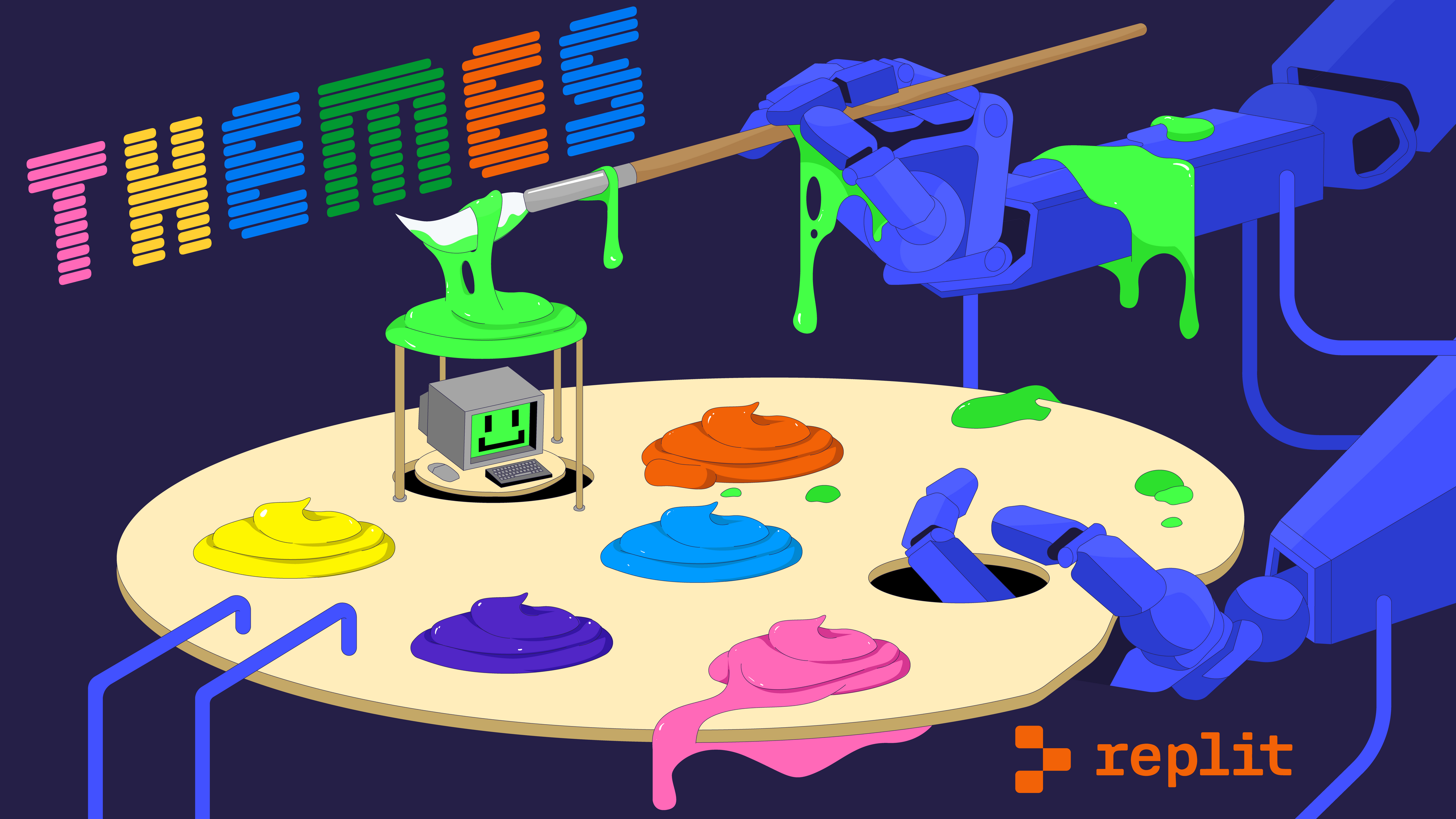
Today we're super excited to announce the launch of one of our most requested features to date. For almost as long as Replit has been around, people in the community have been asking for a way to create and share their very own Custom Themes! Well now you can. With Custom Themes, you can truly make Replit yours by styling everything from the app's colors, both in the IDE and across the site, to the syntax highlighting in your code. Create
 Thu, Dec 1, 2022
Creating a Stable Diffusion Startup in 60 Days with Replit Bounties — A Case Study
Introducing the Startup Magic Prints is an e-commerce store where customers can generate AI artwork and add that artwork to accessories that can be shipped anywhere in the U.S. About Bounties Bounties is a marketplace where anyone can work with Replit's top developers to bring software ideas to life.
 Thu, Nov 24, 2022
Announcing Replit Reps Cohort 2
Applications are now open for the Spring 2023 cohort of Replit Reps, which will kick off in February 2023! For those who aren't familiar, Replit Reps are Replit’s community ambassadors. They’re passionate about making programming fun, accessible, and exciting! They enjoy making awesome projects and sharing their skills. They believe that Replit and coding is for everyone, and that anyone should be able to make something great in a judgement-free zone. Plus, they’re excited to work with our team. Being a Replit Rep is an exclusive opportunity to connect with the Replit team, builders who use Replit, and other leaders outside of your own communities. It's super fun to be a Rep, but it also comes with a lot of responsibility - you'll be a role model for your community, as well as for new folks building on Replit. As a Rep, you'll teach and share Replit through events and content creation - we'll support you in growing skills you're interested in, but you can use any format you prefer - livestreaming on your YouTube channel, sharing on social media, publishing your repls to Community, or whatever else floats your boat!
 Wed, Nov 16, 2022
Tutorial Jam Winners
The inaugural tutorial jam has come to an end! Our wonderful Replit community shipped some fantastic learning experiences! Contestants were tasked with building a learning Repl using our new .tutorial functionality, including using the new floating video pane, just like we've used on 100 Days of Code! Third Place Third place netted the lucky winner $250 and bragging rights! Intro to JS by MattDESTROYER
 Tue, Nov 15, 2022
Bounties - Bring your ideas to life
Imagine a tool where you describe your problem and get a solution built for you. No, this isn't AI or a new "no code" tool. Today we're introducing Bounties, a marketplace where you get to work with the top creators on Replit and bring your software ideas to life!
 Tue, Nov 15, 2022
How the Deel content team shipped an internal website in 1 week with Replit Bounties — A Case Study
About Bounties Bounties is a marketplace on Replit where anyone can connect with and contract top creators on Replit to complete software development tasks. Many Replit developers specialize in JavaScript, Python, web, and bot development. All payments are processed through Stripe and converted to Cycles so that vetted Bounty Hunters can purchase compute resources on Replit and convert their Cycles to local currency if they are eligible. About the Bounty Poster
 Sun, Nov 13, 2022
Branching out the Filetree
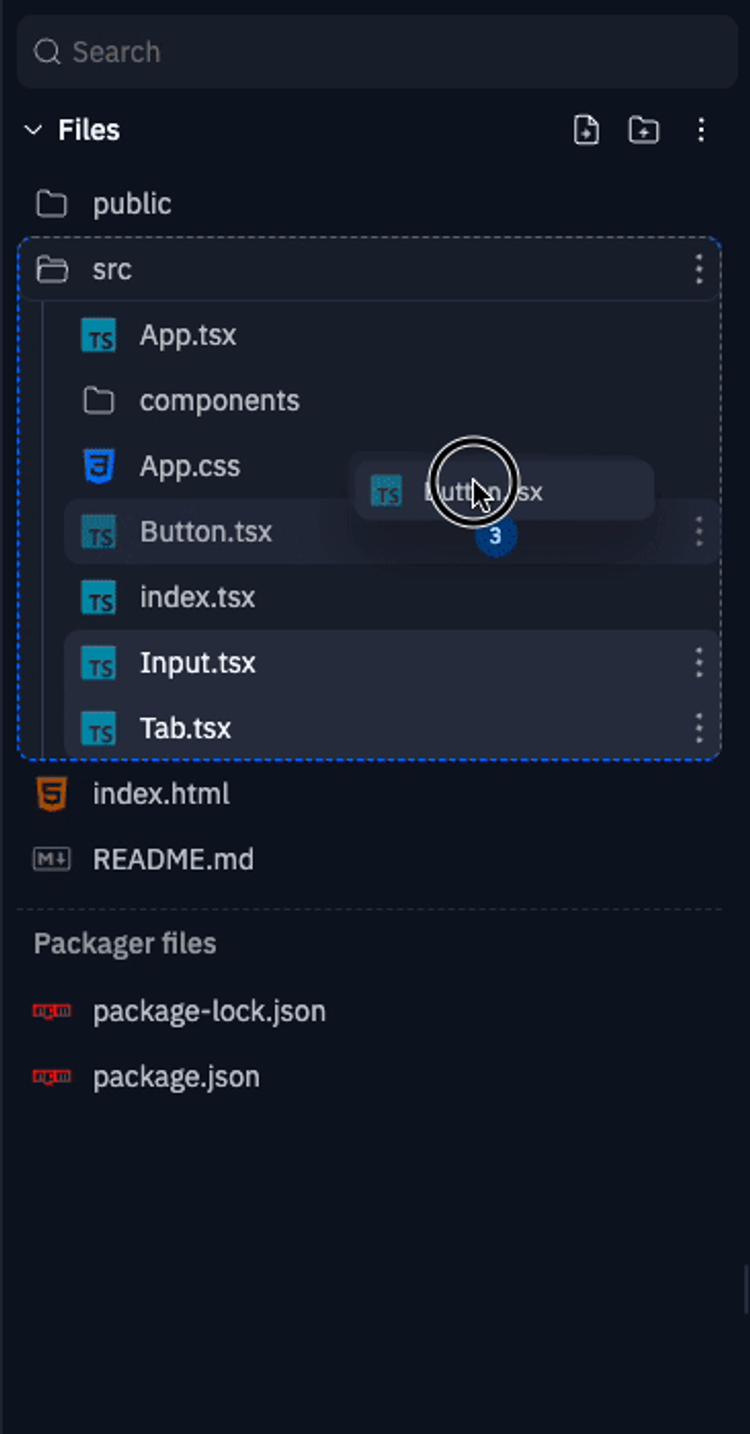
The filetree is a central surface of the workspace which has long been under-leveraged to support the workflows of users. As part of our ongoing workspace revamp, we're shipping improvements to make the filetree more usable and powerful. These improvements include: fixing existing usability issues to make file management seamless improve rendering and loading performance introducing new features to enhance workflows in the workspace Multiselect Say goodbye to painstakingly moving files one by one, because long-awaited bulk actions are now ready for use in the filetree! In the desktop workspace, simply hold down shift to multiselect files. You can also hold down alt to multiselect files incrementally. You can move multiple files at a time by dragging them to your desired location, or perform other bulk actions like open tabs, open pane, download, and delete from the context menu.
 Fri, Nov 11, 2022
See Your Currently Running Repls
Have you ever wondered which of your repls are running at a given time? Do you know which ones are currently serving traffic, and which ones need to be woken up? Do you wish you had more visibility into when your repls have stopped in the past and when they've been restarted? If any of the above describe you, we have just launched a new feature made especially for you: the Repl Status Manager. To use it, go to the Status tab on the My Repls page. When you get there, you'll see a list of all the repls you've ever run in your account, sorted by recent activity -- including the ones that are currently running!