 Fri, Oct 13, 2023
Showcasing Startups on Replit
The fastest way to start, ship, and share The Replit platform isn't just a sandbox; it's a launchpad. There’s a lot to learn from startups building on Replit and how they leverage the platform to monetize and grow. Whether it’s a solo developer bootstrapping their startup on Bounties, or a startup launching their application on Replit Deployments, Replit is the best place to get from idea to software, fast. Here are a few companies building and shipping on Replit today. AutomateNow Automation “experts” and agencies have become so popular that finding real experts has become difficult. AutomateNow is a website that lists and sources the best Zapier and automation experts worldwide. Whether you need an entire business process automated or your Zaps consolidated, this expert network is here to help.
 Thu, Oct 12, 2023
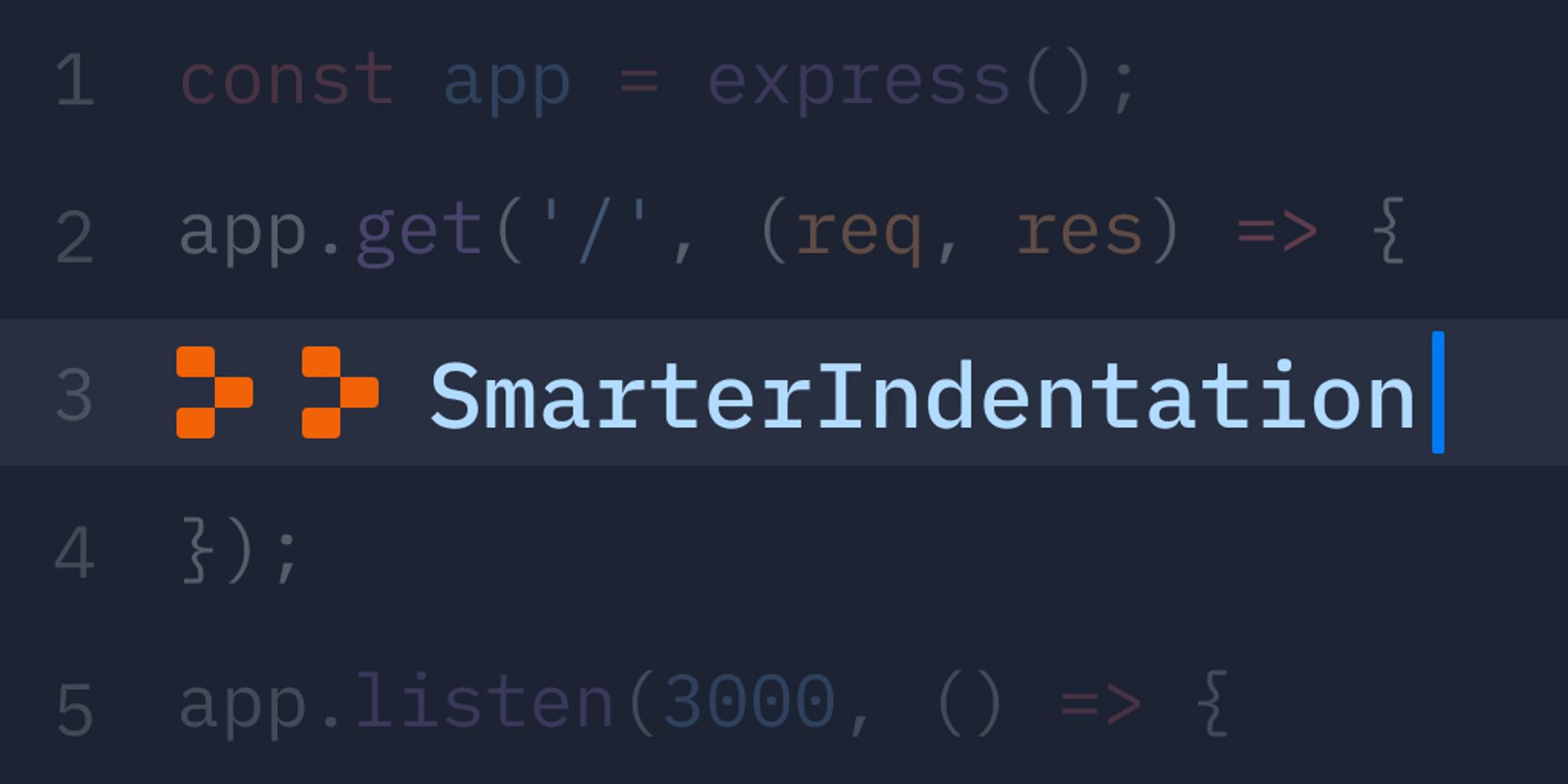
Tabs and Spaces - Smarter Indentation
When you're programming, indentation is something you shouldn't have to think about, as an IDE should handle most of the details nowadays. With Replit, you don't have to think about what happens when you press tab. We're releasing a suite of new indentation and whitespace related features that will make the code editing experience even better. Automatic indentation detection Replit can now automatically detect the indentation of files that you open. That means if a file was indented with two spaces, you'll automatically get two spaces when you press tab regardless of what your normal settings are. Also, adding indentation detection required that we unrestrict what indentation sizes you're allowed to use. Now, you can use any size between 1 and 16. That means if you use an uncommon indentation unit like 3 spaces, you're covered now! The indentation Swiss Army knife There is now an element in the status bar of the code editor that shows your current indentation settings for the file. You can click on this element to show a menu which lets you do a number of things:
 Tue, Oct 10, 2023
Replit’s new AI Model now available on Hugging Face
At Replit, our mission is to empower the next billion software creators. Yesterday, we strengthened our commitment by announcing that Replit AI is now free for all users. Over the past year, we’ve witnessed the transformative power of building software collaboratively with the power of AI. We believe AI will be part of every software developer’s toolkit and we’re excited to provide Replit AI for free to our 25+ million developer community. To accompany AI for all, we’re releasing our new code generation language model Replit Code V1.5 3B on Hugging Face. We believe in open source language models – anyone can use it as a foundational model for application-specific fine-tuning without strict limitations on commercial use. Key Features Extensive Permissively Licensed Training Data: Trained on 1 trillion tokens of code from permissively licensed code from the Stack dataset and publicly available dev-oriented content from StackExchange. State of the Art Results: Leading HumanEval and Multi-PLe evaluation scores for a 3B code completion model. Broad Multi-Language Support: Encompasses Replit's top 30 programming languages with a custom trained 32K vocabulary for high performance and coverage.
 Mon, Oct 9, 2023
Announcing Replit AI for All
For every human endeavor, there inevitably arrives a moment when an innovation profoundly elevates the potential for productivity. For instance, communication was revolutionized by the invention of the printing press, and later, the Internet. After decades of steady progress, software is witnessing its disruption phase as well -- AI is redefining the whole software development lifecycle. AI is one of the key ingredients to go from idea to software, fast -- we witnessed this from over a year of experience in pioneering Ghostwriter Autocomplete and Chat. At Replit, we are on a mission to empower the next billion software creators. Over time, we gained full conviction that such a mission can’t be accomplished without putting our AI features in the hands of every Replit developer. Today, we’re making Replit AI available for everyone. Code completion and AI code assistance are now enabled by default, and available to 23M developers (and counting). Developers on the free plan will have access to our basic AI features, while Pro users will retain exclusive access to the most powerful AI models and advanced features. This was no easy feat, and required not only all our expertise in scaling distributed systems, but also training low-latency LLMs to serve Replit’s compute-heavy AI workloads. Emboldened by the strong performance we obtained with training and serving replit-code-v1-3b, today we are also releasing replit-code-v1.5-3b, a state-of-the-art 3B LLM trained on 1T tokens from a code-heavy pretraining mixture. The dataset includes 30 programming languages and a dev-oriented subset of StackExchange. We will gradually roll out our new code LLM in the next few days, making code completion on the Replit AI code editor even more powerful. Our roadmap for the near future can be summarized in one sentence: AI will redefine every single Replit feature. It won’t be necessary to mention that AI plays a fundamental role every time software is being edited or deployed -- soon we will take it for granted.
 Thu, Oct 5, 2023
I’m not a programmer, and I used AI to build my first bot
Before I joined Replit, I had never written a line of code. A few weeks ago, I built a Slack Bot that uses Google LLMs to provide daily channel summaries. You can fork the template or get started with 100 Days of Code. None of this was possible without Replit. Let me explain why: Getting started with no setup
 Wed, Oct 4, 2023
Bring Your Idea to Production Event Recap
Last week, the SF builder community gathered for an exciting evening at the Andreesen Horowitz office. The mission? Helping developers go from idea to software, fast. The Replit team was onsite to assist in evolving their prototypes into fully-fledged web apps, made production-ready with Replit Autoscale and Reserved VM Deployments. At the end of the night, there were 15 standout project demos. Here's a sneak peek into some that caught our attention: Spotlight projects Unfathom AI: This team showcased a tool designed to craft generative worlds for video games, complete with a 3D avatar of our CEO, Amjad Masad. They deployed their static site with one click using Replit Static Deployments.
 Wed, Oct 4, 2023
Sep 29 Incident Update: Read-Only Repls
On Sep 29, we had a period of about 2.5h from 14:00 to 16:30 (Pacific Time), in which an incomplete build was pushed to our infrastructure that handles storing Repl data. This caused Repls opened during that time window to become read-only or stop working. Any Repl not opened during that timeframe was not affected. We have addressed the root cause, recovered 98% of the affected Repls, and continue to work on recovering the remaining 2%. We understand that your data not being available is unacceptable for both you and your users. This post summarizes what happened and what we're doing to improve Replit so that this does not happen again. Technical details Here is the timeline of what happened, all times in Pacific Time: On July 19, we released a new storage system. This works by recording "manifests" that represent snapshots of the filesystem at a specific point in time, and the manifests point at blocks that contain the users' data. This enables fast and efficient Repl forking. To improve that system, we’ve been working on a change to make obtaining filesystems and saving changes faster by batching commits and executing them asynchronously. This change was being vetted in a test cluster and we were diagnosing failure modes with writing manifests and running garbage collection that caused data corruption. On Sep 29 at 14:00, as part of attempting to deploy additional logging statements to the test cluster, the new (unfinished) feature was inadvertently deployed to production clusters. This is when the outage began. Any Repl loaded with this build could have potentially been put into an error state showing “read only filesystem” or other I/O errors.
 Fri, Sep 29, 2023
Showcasing Startups on Replit
The fastest way to start, ship, and share The Replit platform isn't just a sandbox; it's a launchpad. There’s a lot to learn from startups building on Replit and how they leverage the platform to monetize and grow. Whether it’s a solo developer bootstrapping their startup on Bounties, or a startup launching their production application on Replit Deployments, the businesses on Replit demonstrate that Replit is the best place for iteration and feedback cycles to carry a project from idea to software, fast. Here are a few companies building and shipping on Replit today. Superagent Superagent is an open-source framework that enables developers to integrate AI Assistants into any application in a matter of minutes. With Superagent’s library, you can build an AI assistant that browses the web, reviews pull requests, or executes code on your behalf.
 Thu, Sep 28, 2023
Changes to Hosting on Replit
We remain committed to providing a powerful free development experience to anyone who wants to code. This post is only about the hosting experience, which we are migrating to our new Deployments product. In April of this year, we released Reserved VM Deployments. Then, we shipped Static and Autoscale Deployments. Since then, we’ve noticed even more companies hosting anything from microservices to their entire applications on Replit. Some of our favorite startups to watch include: HeyDATA LeapAI LlamaIndex
 Wed, Sep 27, 2023
Replit Core: Go from idea to software, fast
The Replit Core subscription is the best developer tool subscription in the market to go idea to software, fast. And it is the most valuable. A similar dev environment can cost up to 10x more on GitHub Codespaces, and a high usage app will get crushed with overages 3-4x more expensive on Vercel (source). This end-to-end offering makes Replit Core the best subscription to build and launch your business. HeyDATA.org has gone from first line to +$200k ARR, and as founder, Steve Moraco says: "I don't think I would ever be able to complete a project like this without Replit. I started not knowing anything about web development, or even GitHub for that matter, and I've sort of just learned one skill at a time. I’ve gone from knowing almost nothing about technical development, to building a business and earning money" - Steve Moraco The Core bundle includes: 8 GiB RAM & 4 vCPU cloud-based development environment with no limits on usage, giving a powerful building experience Replit AI, powered by market-leading models (currently GPT-4). Debug, autocomplete, and turn natural language into code with one-click.
 Tue, Sep 26, 2023
Superagent.sh on Replit: An open-source framework for creating AI-assistants
Demand for AI-driven solutions is surging, and using an AI-assistant is the fastest way to integrate AI into any product. Superagent’s assistants leverage large language models to understand human language, reason, and perform various tasks. In the spirit of “idea to software, fast”, superagent.sh used Replit to create an open-source, Agentic AI framework that enables any developer to integrate production ready AI Assistants into any application in a matter of minutes. Within 48 hours of Replit’s code-exec library release, superagent.sh added it to their core framework, deployed it (using Replit Autoscale), and created a Repl that enables anyone in the open source community to fork it, customize it, and deploy it themselves. What can Superagent.sh do? Superagent enables developers to create AI assistants for a wide range of tasks, including customer support, legal work, code reviews, content generation, and more.
 Mon, Sep 18, 2023
AI Agent Code Execution API
Lately, there has been a proliferation of new ways to leverage Large Language Models (LLMs) to do all sorts of things that were previously thought infeasible. But the current generation of LLMs still have limitations: they are not able to get exact answers to questions that require specific kinds of reasoning (solving some math questions, for example); similarly, they cannot dynamically react to recent knowledge beyond a particular context window (anything that happened after their training cutoff window comes to mind). Despite these shortcomings, progress has not stopped: there have been advances in building systems around LLMs to augment their capabilities so that their weaknesses are no longer limitations. We are now in an age where AI agents can interact with multiple underlying LLMs optimized for different aspects of a complex workflow. We are truly living in exciting times! Code execution applications LLMs are pretty good at generating algorithms in the form of code, and the most prominent application of that particular task has been coding assistants. But a more significant use case that applies to everyone (not just software engineers) is the ability to outsource other kinds of reasoning. One way to do that is in terms of sequences of instructions to solve a problem, and that sounds pretty much like the textbook definition of an algorithm. Currently, doing that at a production-level scale is challenging because leveraging LLMs' code generation capabilities for reasoning involves running untrusted code, which is difficult for most users. Providing an easy path for AI Agents to evaluate code in a sandboxed environment so that any accidents or mistakes would not be catastrophic will unlock all sorts of new use cases. And we already see the community building upon this idea in projects like open-interpreter. Two options But how should this sandbox behave? We have seen examples of multiple use cases. Google's Bard recently released "implicit code execution,” which seems to be used primarily for math problems. The problem is boiled down to computing the evaluation of a function over a single input and then returning the result. As such, it is inherently stateless and should be able to handle a high volume of requests at low latency. On the other hand, ChatGPT sessions could benefit from a more stateful execution, where there is a complete project with added files and dependencies, and outputs that can be fetched later. The project can then evolve throughout the session to minimize the amount of context needed to keep track of the state. With this use case, it's fine for the server to take a bit longer to initialize since the project will be maintained for the duration of the chat session.
 Thu, Sep 14, 2023
Showcasing Startups on Replit
The fastest way to start, ship, and share The Replit platform isn't just a sandbox; it's a launchpad. There’s a lot to learn from startups building on Replit and how they leverage the platform to monetize and grow. Whether it’s a solo developer bootstrapping their time on Bounties, or a startup launching their production application on Replit Deployments, the businesses on Replit demonstrate that Replit is the best place for iteration and feedback cycles to carry a project from idea to product market fit. To prove this, we're sharing a few companies building and shipping on Replit today. Leap API - Headshot AI Add image, music, and other AI generations to your app in minutes with Leap's API and SDK. Leap launched “Headshot AI”, an app that allows you to generate a professional headshot in minutes. No need to schedule a professional headshot session for that perfect LinkedIn Photo. Just upload some of your existing photos to fine-tune the model to your face and get your professional results in minutes.
 Wed, Sep 13, 2023
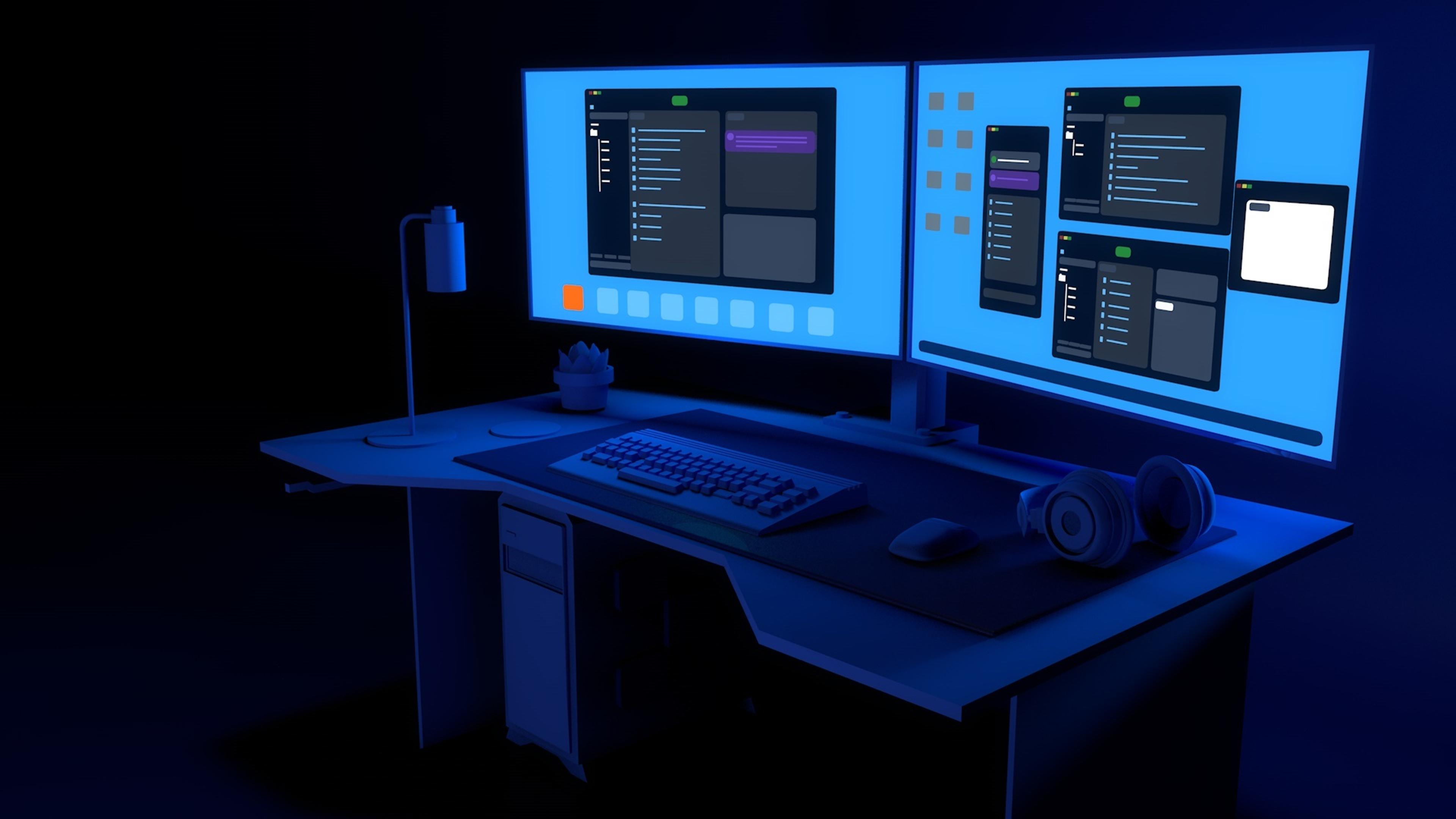
Introducing the Replit Desktop App
Replit is first and foremost a cloud-based company. You can code, run, and deploy your favorite apps using virtually any technology or framework, all on one platform. But just because we’ve created a cloud-based product doesn’t mean that you have to be limited to using Replit in the browser. That’s why today we’re super excited to announce the official Replit Desktop App. About the app With the Replit Desktop App, you can finally enjoy a native Replit experience free of browser distractions, on macOS, Windows, and Linux. This new form factor allows you to stay focused on coding with a “zen-mode” like experience, quickly create multiple windows for different Repls, and easily access Replit from your dock or home screen.
 Mon, Sep 11, 2023
Deploy Bun Apps that Autoscale on Replit
Using Replit Autoscale Deployments, developers can launch Bun apps that automatically scale from zero to meet customer demand, combining the speed of Bun and the power of Replit infrastructure. Build, iterate, deploy, and scale directly within Replit in seconds. Here’s how you can create and deploy a Bun App to Replit Autoscale Deployments in less than a minute: