
 Thu, Feb 26, 2026
We Built a Video Rendering Engine by Lying to the Browser About What Time It Is
How Replit turns any web page into a deterministic video by virtualizing time itself, patching key browser audio APIs, and waging war against headless Chrome's quirks.
 Tue, Jan 20, 2026
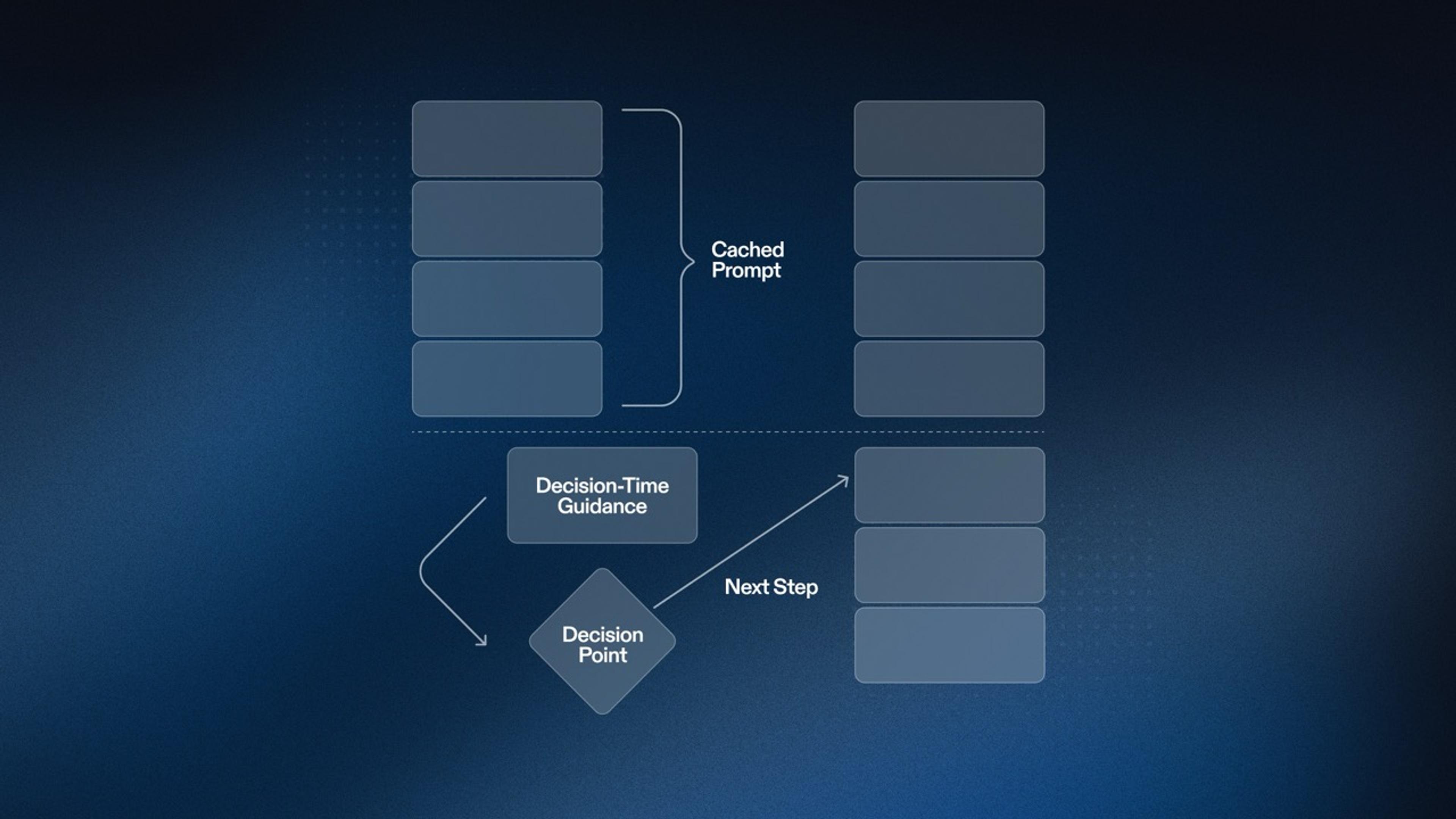
Decision-Time Guidance: Keeping Replit Agent Reliable
Replit Agent stays reliable through decision-time guidance—injecting situational instructions at key moments rather than front-loading all rules.
 Wed, Jan 14, 2026
How Replit Secures AI-Generated Code [white paper]
AI security scans alone aren't enough. New research shows hybrid approaches combining static analysis with LLM reasoning are essential for vibe coding.
 Wed, Dec 17, 2025
Inside Replit’s Snapshot Engine: The Tech Making AI Agents Safe
How Replit's snapshot engine makes AI agents safe: instant filesystem forks, versioned databases, and isolated sandboxes enable reversible AI development.
 Mon, Dec 15, 2025
Enabling Agent 3 to Self-Test at Scale with REPL-Based Verification
How Replit built a novel REPL-based verification system that combines code execution with browser automation to catch "Potemkin interfaces", enabling Agent 3 to work autonomously for 200+ minutes.
 Tue, Dec 9, 2025
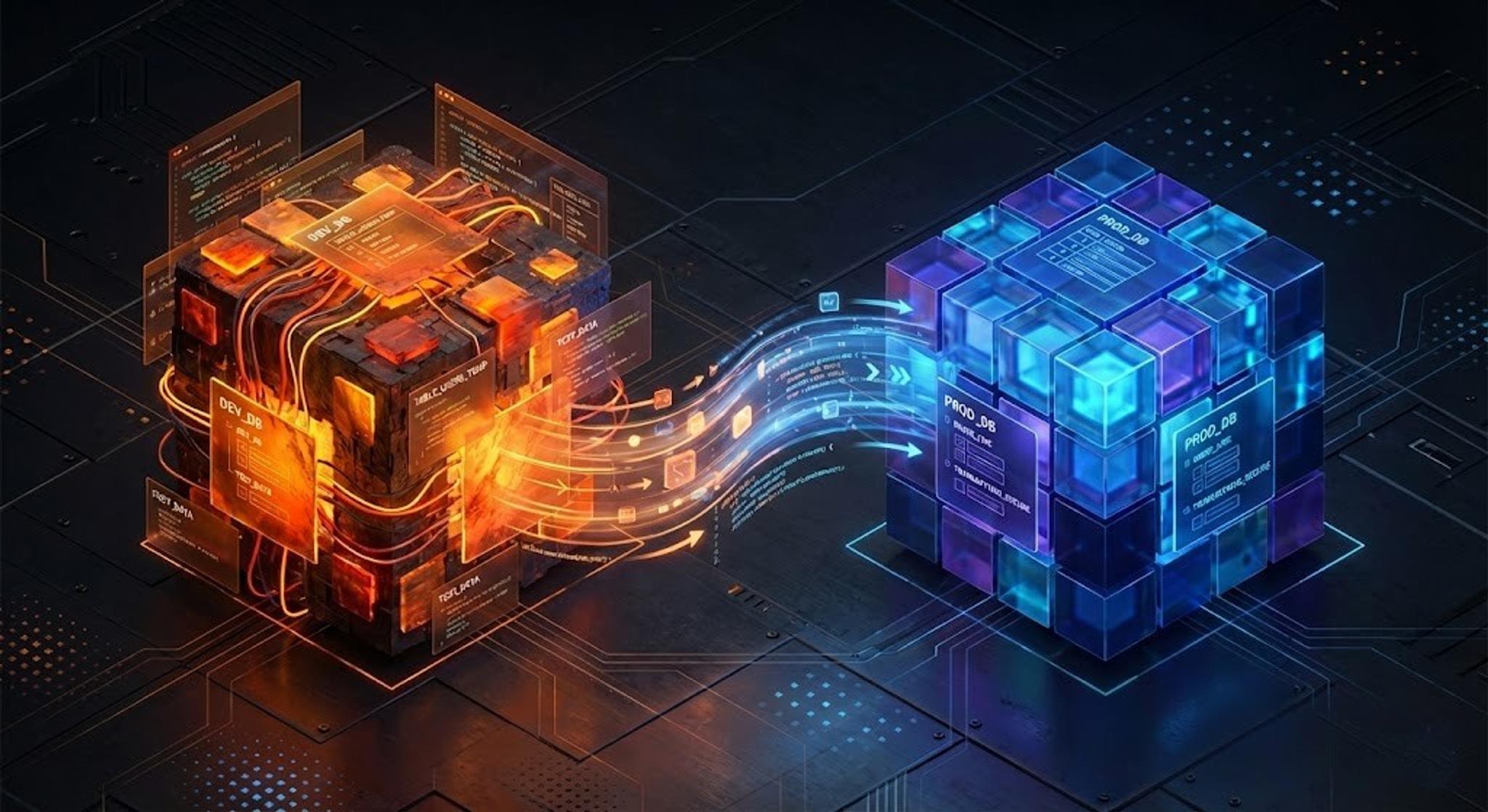
Building Production-ready Apps with Automated Database Migrations on Replit
Learn how Replit automated database migrations between dev and production environments, enabling safe AI agent development with minimal user intervention.
 Wed, Mar 5, 2025
Using Tvix Store to Reduce Nix Storage Costs by 90%
For the past few years, Replit has been using Nix to serve packages/dependencies and provide consistent development environments to our users. Nix on Replit allows users to have access to a large number of packages and libraries that can be seamlessly integrated into a user's project. Motivation In order to quickly serve thousands of packages to our users, we attach a large Nix store persistent disk to all development containers serving Replit apps. While this approach has worked well for a while, this persistent disk grows with every subsequent NixOS release (eventually reaching a size of 20Tb). When considering ways to reduce the size of this disk, one important constraint was to never remove store paths from the cache. Project that depend on packages in older Nix channel releases could still link to these store paths, so in order to maintain backwards compatibility those store paths must remain. Tvix Store Tvix is a new modular implementation of Nix that contains a series of components that can be used individually. One of these components is the Tvix store. tvix-store is a Nix store implementation backed by the tvix-castore. The tvix-castore manages blobs (file contents) and directory info (file metadata, like names, permissions, etc). tvix-store manages nix path info metadata, effectively creating a mapping of Nix store paths to tvix-castore contents.
 Thu, Feb 27, 2025
Introducing Workflows
With Workflows, you can easily save your development processes and organize them as a sequence of Tasks. Instead of having to repetitively type commands into your shell and remember them, Workflows provide an intuitive interface to configure your frequently used commands and execute them with the click of a button. Simplifying development with Workflows Workflows give you the ability to better organize your project execution pipeline, while offering an accessible interface to reuse them. Using the Workflows pane, you can easily configure specific buttons to run specific commands, and even link multiple Workflows together in a chain. Instead of copy pasting "cd ./client && npm run dev && cd ../server && node server.js", you can define the procedure as a Workflow with multiple Tasks. Let's see how it works with an example.
 Wed, Feb 26, 2025
Replit's All-new Database Editor
This week, we launched a new Database Editor feature on Replit. This feature is another addition to Replit’s full suite of tools that make it easy for anyone to build an app — no coding knowledge required. When you build an app on Replit, you get a fully-functioning project that’s ready to send out to the world. This includes real databases powered by Postgres: the most popular database in the world, that powers many of the applications you use every day. Did you know? Postgres is used by half of all professional software developers, according to StackOverflow’s developer survey. Replit handles all the setup and management of your databases, so it’s never been easier to get started. Now, we’re making it even easier to use databases on Replit. Inside your app’s workspace, head to the “database” pane, and click to the “My Data” tab. Here, you’ll see a spreadsheet-like view of your app’s data.
 Tue, Nov 26, 2024
So you suspect you have a memory leak...
Programming languages with Garbage Collectors are fantastic! You no longer need to keep track of every single piece of memory that your program needs to run and manually dispose of them. This also means that your programs are now immune to bugs like double-free (accidentally freeing a resource more than once, leading to crashes or security vulnerabilities) and most memory leaks (accidentally not freeing a resource, leading to crashes by running out of memory). But it is still possible to have a memory leak. Consider this TypeScript snippet: The global cache makes fibonacci fast, but it relies on a global cache that has no way of being cleared, so it will always accrue memory when it is called with larger and larger numbers. Slowly but surely. At some point during the development of Replit Agent, one of our engineers spotted the following graph in our dashboard: We had strong evidence that the agent processes were running out of memory roughly once an hour, and that likely means a memory leak. Since we were constantly serializing each agent process’ state to its Repl, we were able to recover without losing any data, but that meant that we had to re-run several LLM calls, and those tend to add up. This also implies that users would sometimes see some spurious slowdowns, so that was suboptimal too.
 Fri, Oct 11, 2024
Shell2: 200× faster, persisted, multiplayer-native Shells
What even is a terminal? Back when computers were still in their infancy, the “computer” usually was a big cabinet in the middle of a room. They typically exposed some internals via a front panel with lots of knobs and ports. Users would connect a terminal device (sometimes called a teletype or a TTY) to this front panel in order to input text and print the corresponding output. In the 1970s when microcomputers like the Apple I started becoming more mainstream, displays and keyboards started to be integrated into the computers themselves. The rise of the graphical user interface meant that the displays and keyboards weren’t just used for the terminals themselves but for various other graphical programs too. At some point, smart computer people thought “wait a minute, we can make a graphical program that just emulates what a terminal would have done anyways!” and thus the terminal emulator was born. In these emulators, the wires of the traditional TTY are replaced with pairs of file descriptors (an abstraction for a stream of bytes) known as the PTY (short for pseudo-TTY). Importantly for Replit, the PTY doesn’t use a serial port to connect the TTY to the computer which means we can operate a PTY remotely over a network!
 Wed, Aug 14, 2024
How Replit makes sense of code at scale
For any company making creative tools, being able to tell what its most engaged users are building on the platform is critical. When the bound of what’s possible to create is effectively limitless, like with code, sophisticated data is needed to answer this deceivingly simple question. For this reason, at Replit we built an infrastructure that leverages some of the richest coding data in the industry.
 Mon, Jul 1, 2024
Improved Dependency Management
We recently revamped the dependency management experience in your Replit workspace. You can now use and configure multiple languages in one Repl. We’ve consolidated language support, packages, and system dependencies into one new Dependencies pane for beginners and experienced developers alike! System Dependencies and Modules At Replit, we want to make it as easy as possible to spin up a project in the language of your choice without spending too much time on configuration. But, sometimes you have more specific requirements! That’s where System Modules and Dependencies come into play, under the “System” tab. We support most programming languages by bundling language servers, formatters and packagers via System Modules. For example, for Python there’s the Python Tools module, for Node.js there’s the Node.js Tools module, and so forth. If you use a template or import a project via GitHub, we do our best to automatically install the modules you need. If you want to use additional languages, you can simply add Modules that suit your needs. Under the hood, system modules are powered by Nix.
 Fri, Apr 5, 2024
Advanced port configuration
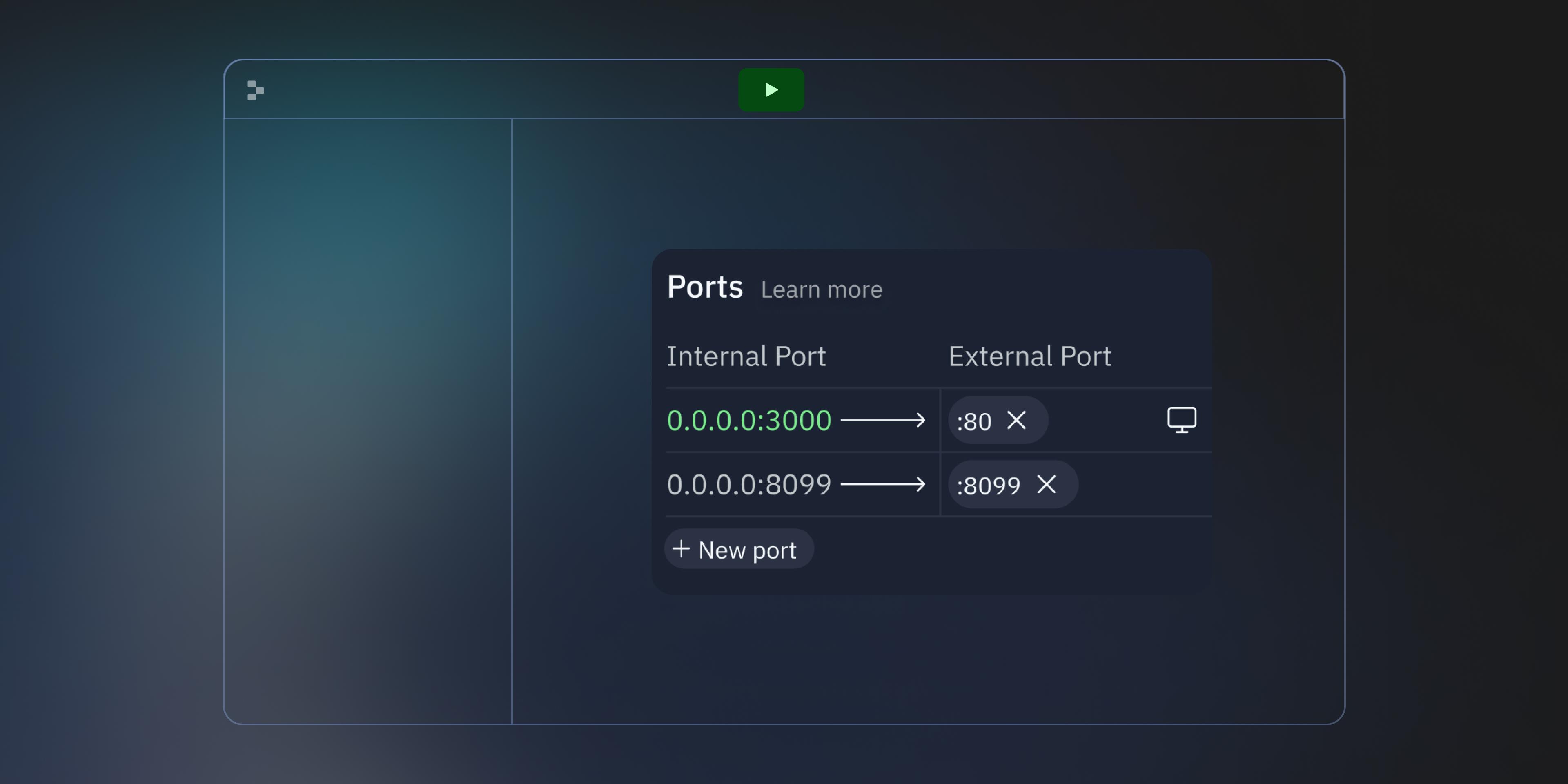
We recently spent a few months making ports easier to work with on Replit, so you can develop more complex apps predictably. What are ports? When a computer receives a TCP/UDP request, ports define which program that request should route to. (If you need a more basic explanation of TCP ports, start here). On a normal computer, you only have one layer of ports: your programs define a port that they listen to, and when traffic hits that port on your computer from the internet, it gets routed to the appropriate process. Some protocols have defined standard ports — for example, Simple Mail Transfer Protocol Secure (SMTPS), the email protocol, generally listens on port 587, and most web servers listen on either port 80 (HTTP, unencrypted) or port 443 (HTTPS, encrypted). You can think of ports like mailboxes. Imagine those big mailrooms in skyscrapers that ensure the mail lands in the right mailbox — the mail is the data being sent and received, and the mailboxes are the ports.
 Fri, Mar 29, 2024
Searching Nixpkgs in Under 30 Milliseconds
Today, we’re releasing the first version of rippkgs, a CLI utility for indexing and searching Nix expressions. With rippkgs, you can quickly search the nixpkgs available to your system with accurate results. Read on for more details about why we created it, how to use it, and how it works. Motivation At Replit, we use Nix to empower millions of users with hundreds of programming languages. The power of Nix’s reproducible expressions allows us to share system packages fearlessly and quickly with ultimate flexibility for end users. However, users are often not familiar with Nix, so we need to give them the tools they need to interact with it comfortably. Experienced Nix users looking to install or use a package may reach for nix-env, nix search, nix-locate, or search.nixos.org. These tools are excellent for visibility into what’s available in the largest package repository, nixpkgs. Unfortunately, none of these tools give us what we need to provide great search for Replit users: nix-env and nix search are bundled with Nix, which means they’re already accessible in Replit environments, but searching for a package can take several seconds - way too long for those of us who are impatient and just want to find what we’re looking for quickly. nix-locate works by indexing built derivation paths, which is great when you know the path you’re looking for (like /bin/jq), but not great when looking for a package with unknown output formats.