
 Mon, Apr 3, 2023
April 2 Potential GitHub Credentials Exposure
Yesterday, on April 2, 2023, Replit discovered a site vulnerability that may have exposed GitHub auth tokens for <0.01% of Replit users, stemming from use of the GitHub import feature. This could have permitted unauthorized read/write access to all the repositories of those users by default (users can choose to authorize just a subset of repositories). We have no indication that those exposed tokens were misused or used to exploit GitHub repositories. The vulnerability has been fixed, all existing GitHub auth tokens associated with the Replit app have been revoked, and access to the GitHub import feature has been restored. The number of exposed users was limited to <0.01% because there are two preconditions that needed to be met for a user’s Repl to be vulnerable: The Repl was created using the GitHub import feature; and One of:
 Wed, Mar 22, 2023
Announcing Outbound Data Transfer Limits
Beginning April 7th, Replit will begin enforcing limits on the amount of outbound data that developers can transmit from their Repls to users and external services. Inbound data transfer is free. You can see how much outbound data transfer you've used on your account page. The meter resets at UTC midnight at the start of every month, and the base limit depends on your plan. Free tier developers will receive 10 GiB, Hacker developers 50 GiB, and Pro developers 100 GiB. These plan limits are captured on our pricing page. You may purchase additional outbound data transfer using Cycles or another payment method at $0.10/GiB. You will receive an email and on-plaform notification when you are approaching and when you have reached your limit so you can take action and keep your Repls running.
 Thu, Mar 16, 2023
Worldwide Repls, part 3: Firing Up The Engines
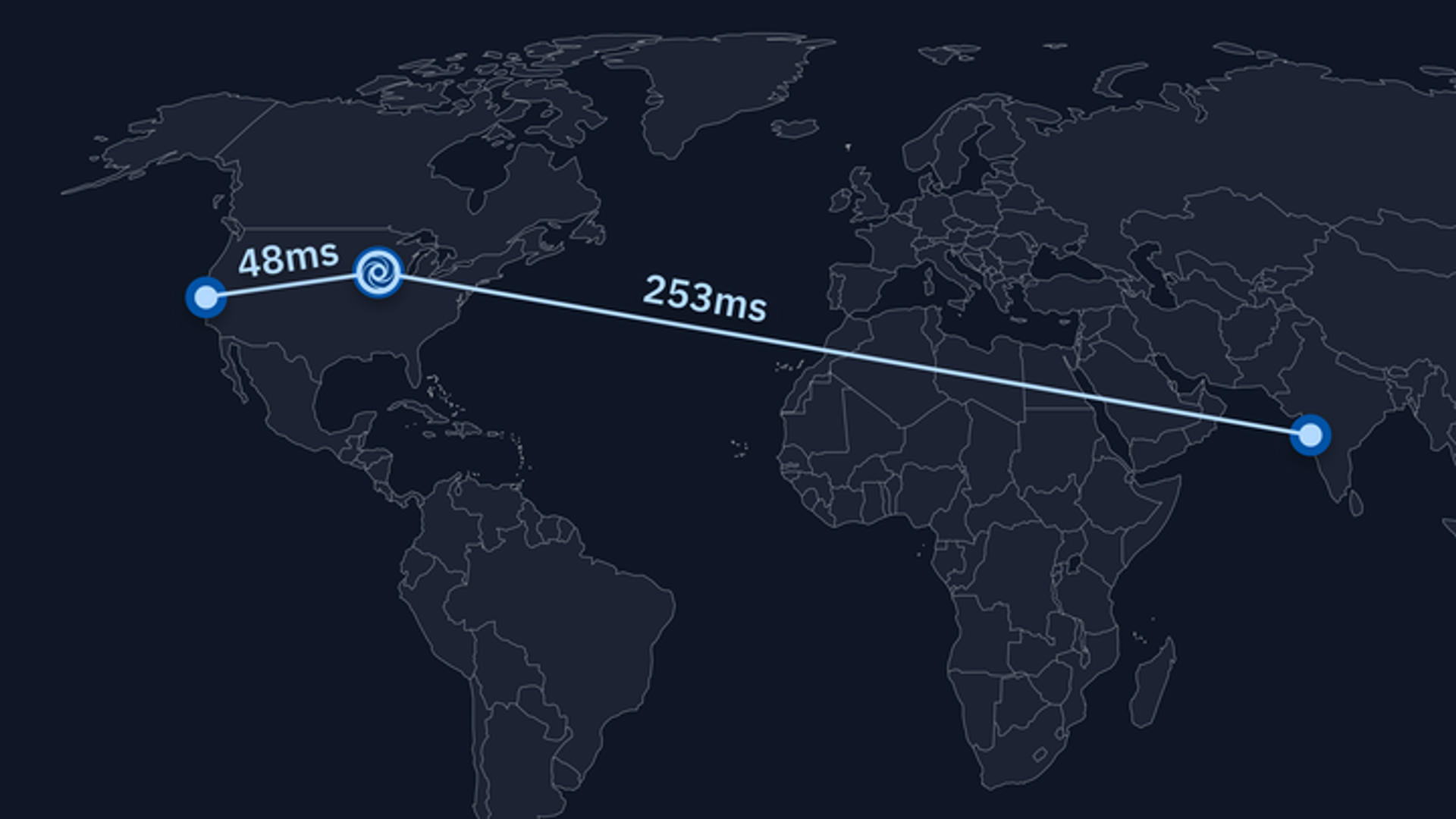
At Replit, we operate a cloud-based infrastructure that allows developers to collaborate and create within an all-in-one, integrated development environment. One of the most significant parts of this experience is the latency perceived by the developer when interacting with the workspace. While we can always add resources such as CPU, RAM, and storage on demand, when tackling latency we have to deal with some fundamental physical limits such as the speed of light. This means that you can only do so much for latency by throwing resources at it, and at some point, you just need to bring the server closer to the end user. Given that we want to provide a platform for the next billion software creators, that means that we need to have infrastructure distributed around the world. While we run many of the workspace interactions, such as file editing and browsing, locally on the user's browser, many tasks still depend on communicating with your Repl running on our servers. Examples of such interactions are typing into the shell and getting Language Server Protocol results like catching errors and finding symbol definitions. Because these interactions require communication between the user's browser and the Repl, the only way to reduce latency is to bring the two closer together. In doing that, we also ensure that each bit of the development feedback loop remains quick and efficient, improving the experience for the user. Replit's platform team works hard on improving the infrastructure at the core of Replit. This includes running containers, providing hosting, managing storage, and networking. We recently made some substantial improvements to the infrastructure: dividing our infrastructure into multiple failure domains with clusters, moving our global state management from Redis to an SQL-backed Control Plane, and creating our own load balancer for assigning Repls to machines. These improvements not only improve performance or minimize the surface for inconsistent states to show up, but at the end of the day, they provide an all-around superior experience to the developers on our platform. In this post, we'll give an overview of how Replit's infrastructure is organized, and then dive into detail about how we tackled the next step in improving the experience for a large number of developers: geographic distribution. Clusters: Isolation and Ease of Management
 Thu, Mar 2, 2023
Remote Access to Your Repls via SSH
Last week we announced the Pro plan to speed up your development with Replit's AI tools and an even more powerful Workspace. Today we're expanding all of our paid plans to add the ability to use SSH to remotely access your Repls. How do I get started? If you're subscribed to a paid plan, you'll notice a new "SSH" entry in the Tools section of the Workspace. You can add your SSH keys and start working with your Repl remotely!
 Mon, Feb 20, 2023
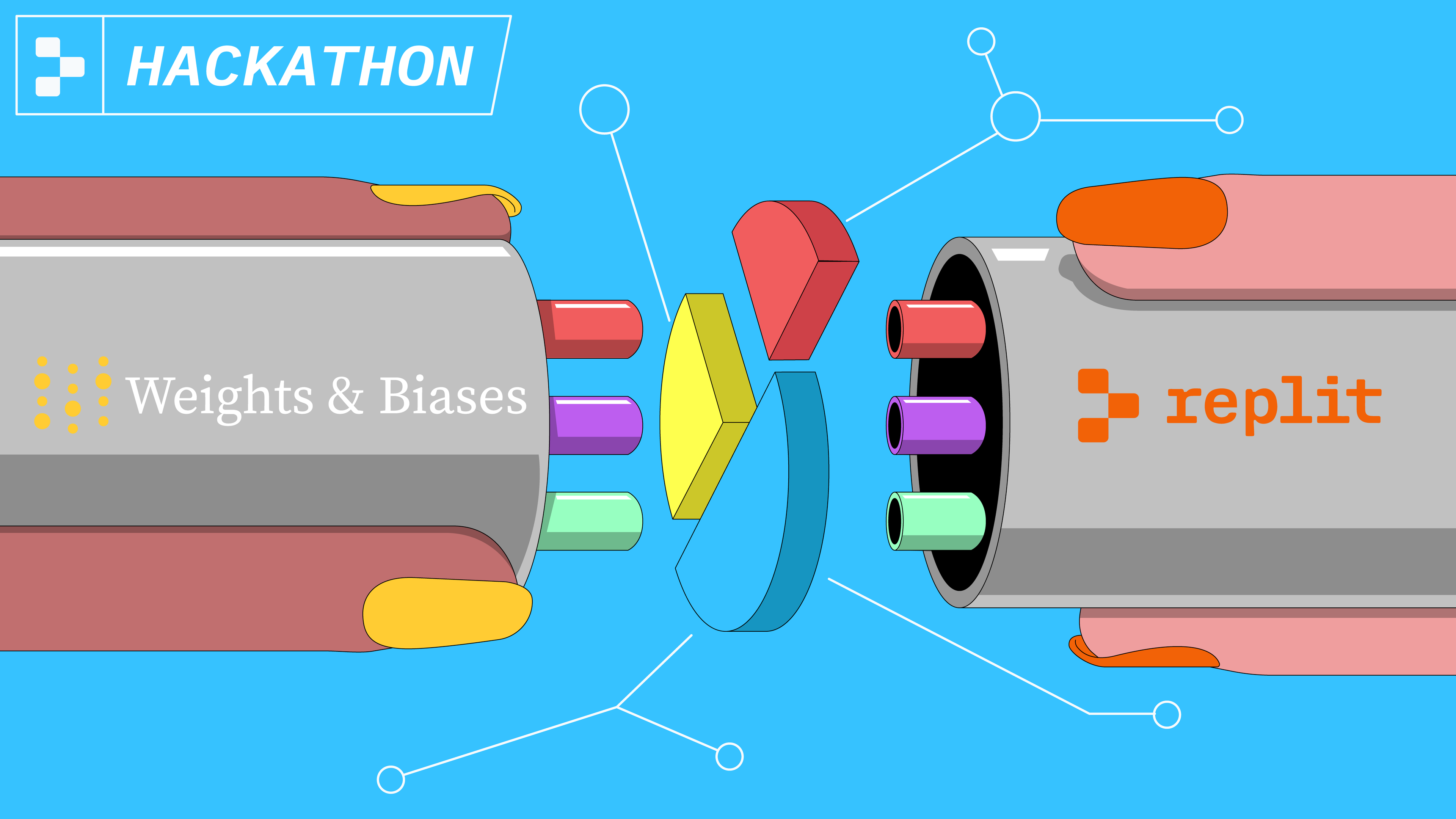
Replit x Weights & Biases Machine Learning Hackathon Winners
The Replit x Weights & Biases Machine Learning Hackathon was Replit’s very first machine learning-focused hackathon that took place on February 4-11, 2023 with participants selected from all over the world! After applying and being accepted into the hackathon, participants hacked for seven days on their projects, using both custom machine learning models and fine-tuning existing ones, all by combining the power of Weights & Biases and Replit. During the hackathon, builders collaborated and got help from mentors on our Discord (shout out to Morgan and Ayush!), worked through examples and demos from the opening ceremony and our list of resources, and even documented their journeys using W&B Reports. In the end, we gave away over 500,000 Cycles worth of prizes to the best projects created by combining the two technologies. Expert ML engineers from Weights & Biases judged each project to decide the ultimate winners: And the winners are...
- Tue, Jan 10, 2023
Apply for Replit’s first Machine Learning Hackathon
We’re extremely excited to announce Replit’s very first Machine Learning Hackathon, in partnership with Weights and Biases! If you’re interested in joining the waitlist, head over to the official site. Weights and Biases is a machine learning platform that tracks everything you need to make your models reproducible – from hyperparameters and code to model weights and dataset versions. If you’ve never worked with W&B, check out this example Repl for an introduction! The total prize pool is over 500,000 Cycles – there are multiple opportunities to win, with prizes for Best Weights & Biases Report, Best Repl, an Honorable Mention, and of course, the Grand Prize of 300,000 cycles.
 Tue, Jan 10, 2023
Making Repl Identity More Accessible
In August last year, we announced Repl Identity, a signed identity for every Repl that your code can use to authenticate other Repls when communicating with your APIs and services. For a quick refresher, you can try out the demo that decodes the identity token and outputs it to the shell. We have a Go package for this already (docs here), but there's a limited selection of bindings for other languages. To that end, we're rolling out a command-line tool in every Repl that allows you to use features like Repl Identity in any language that can run a subprocess. Here's a quick demo that you can try in our own Repls: Check out this example Python Repl that creates and verifies a Repl Identity token:
 Thu, Dec 22, 2022
Redesigning Cycles Transaction History
Earlier this year we introduced Cycles to the platform, a virtual token that can be earned or purchased to add compute power and functionality for your Repls. Hundreds of thousands of cycles transactions have been made to date. And now more Replit community members are able to earn cycles of their own through bounties! In the past, Replit transactions looked something like this:
 Sun, Nov 13, 2022
Branching out the Filetree
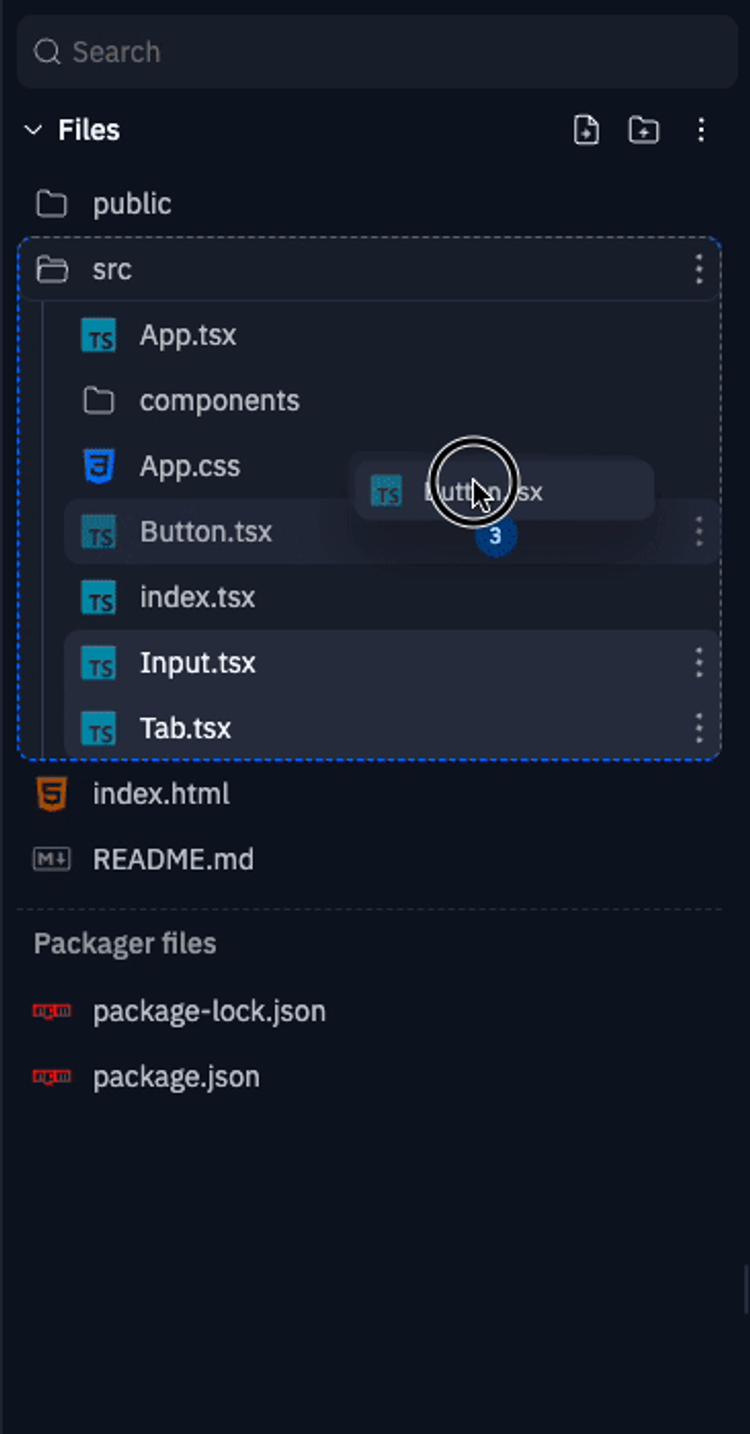
The filetree is a central surface of the workspace which has long been under-leveraged to support the workflows of users. As part of our ongoing workspace revamp, we're shipping improvements to make the filetree more usable and powerful. These improvements include: fixing existing usability issues to make file management seamless improve rendering and loading performance introducing new features to enhance workflows in the workspace Multiselect Say goodbye to painstakingly moving files one by one, because long-awaited bulk actions are now ready for use in the filetree! In the desktop workspace, simply hold down shift to multiselect files. You can also hold down alt to multiselect files incrementally. You can move multiple files at a time by dragging them to your desired location, or perform other bulk actions like open tabs, open pane, download, and delete from the context menu.
 Wed, Oct 19, 2022
Replit Mobile App
Introducing the Replit mobile app for Android and iOS. Today, we’re excited to announce the launch of the Replit mobile app. With the mobile app, you can code anything, anywhere. Build more, type less.
- Fri, Sep 23, 2022
Worldwide Repls, part 2: Load balancing for fun (although not quite profit)
In our previous blog post about Worldwide Repls, we talked about how we revamped part of our infrastructure to build a new abstraction that allowed us to build other components on top of it: the control plane. In this entry, we'll talk about the very first thing we built on top: a load balancer. The need for an alternative load balancer All of our infrastructure currently runs in Google Cloud Platform, and it comes with several options for very robust load-balancing across services in the form of the Google Cloud Load Balancer (a.k.a. GCLB). Since it's very easy to get started, that's what we used for several years. It has all sorts of very neat features like SSL termination, geographical routing to minimize latency, integrates with their autoscaling solution to let us grow and shrink the size of our fleet to reflect the number of concurrent users, and is even optimized to support a request load that is not quite homogeneous: a few requests that are 10,000x more expensive than others is totally supported. So far everything looks great on paper. Why did we need an alternative load balancer? When we originally announced that we were going to support non-US compute regions, we discovered that there was a small disconnect between how the GCLB operates and how we would like it to operate: back then, when a user made a request to start or connect to a container, the container would be created geographically near where the user made the request if possible, and would fall back to where we had capacity. This unfortunately meant that there were several cases where a user in India would start a container, it was created in the US, and all network packets would still need to perform one earth-sized roundtrip. To make things worse, this also happened to some folks in the US, so we had to revert that change. By this point in time it was clear that we had to create an intermediate layer that could allow us to make decisions as to where the containers were created, since we had all the information about the Repl upfront, but GCLB alone was not able to use this information. A bit later, our team of SREs found something even more disturbing: the distribution of load across our fleet was all over the place!
 Wed, Sep 14, 2022
History++ - A Better Way to Do Versioning
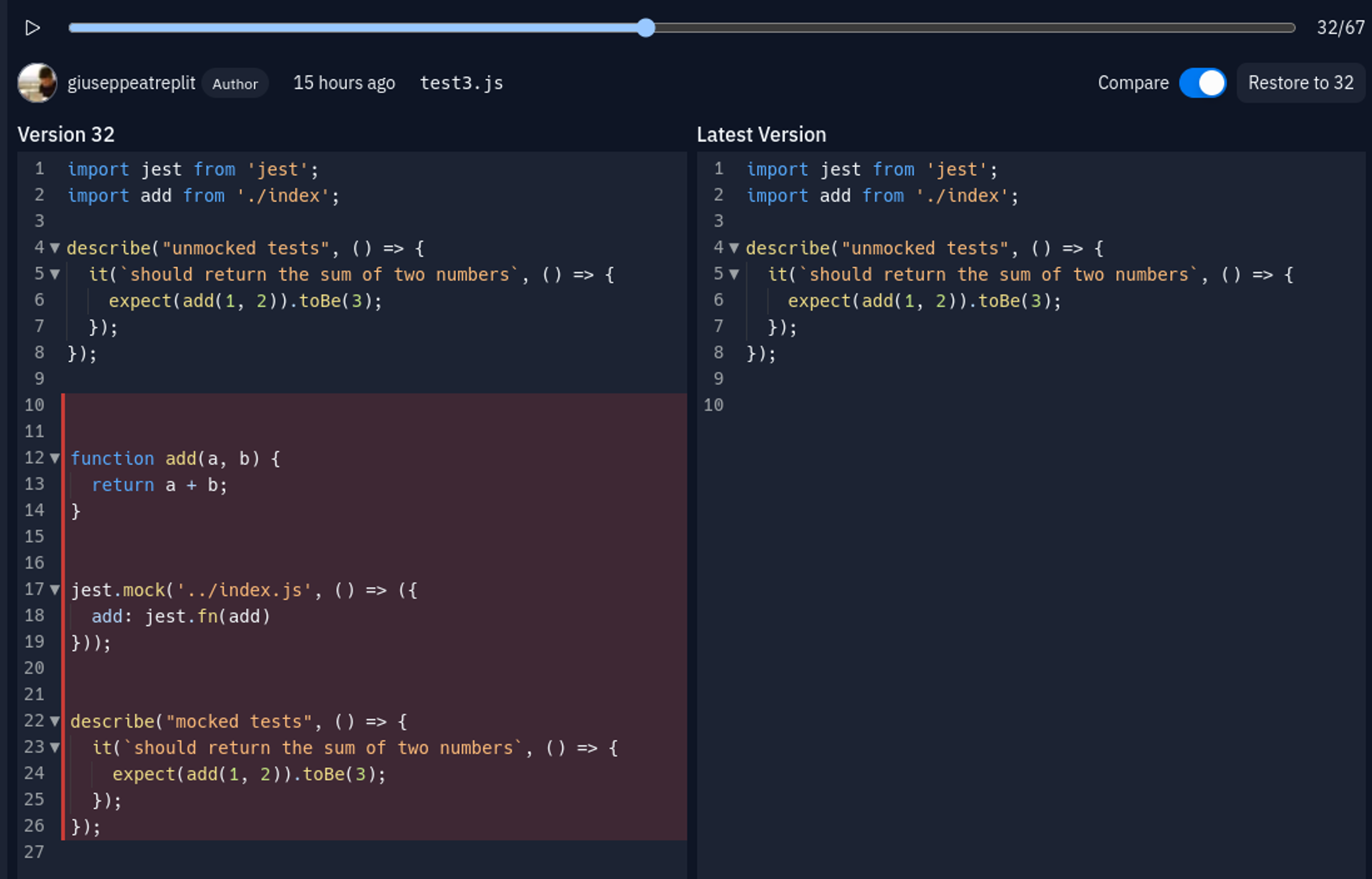
Have you ever had to start over on a piece of code because you overwrote something by accident? Made an edit, replaced it, and then wished you could go back? Programmers have tools like git and the undo/redo stack to help them deal with challenges like this. Replit, of course, supports these things. But, we think there's a better way. Over the last week, we rolled out the new history UI to general availability. Here's what it looks like: The Basics
- Tue, Aug 2, 2022
Zero-Click Auth For Your Apps
Picture this: you've built an arcade game on Replit. Gamers playing your game will head to the repl's cover page and click "Run". They love your game, and they send you feature requests and ideas in the comments. Now, you want to keep track of high scores and add other social features to your game. This used to be a show-stopper: there was no way to verify the API requests coming in, so your high-score feature was either easy to spoof, or simply didn't get off the ground. We're rolling out Repl Identity to solve this. Cover Page Runs When you click "Run" on a repl's cover page, we create what we call a "guest fork" in the background. For all intents and purposes, this is just like you clicked "Fork" on the repl - but it's ephemeral and gets cleaned up when you're finished running that repl. These stateless guest forks make the cover page experience work, but a side effect is that they don't have secrets and they don't share certain resources (like the Repl Database). That's good for you: a user running a guest fork can't get a shell and view all of your secrets! However, this functionality makes it hard to figure out how to authenticate a cover page run to any of your other repls that do have the secrets. An isolated Repl DB means no data sharing. No secrets means no access to APIs or authentication keys. That's made it significantly harder to build multiplayer, social, or just user-oriented experiences in applications running in the cover page, because they are so isolated. That's what Repl Identity is for.
 Wed, Jul 27, 2022
Get Replit Famous
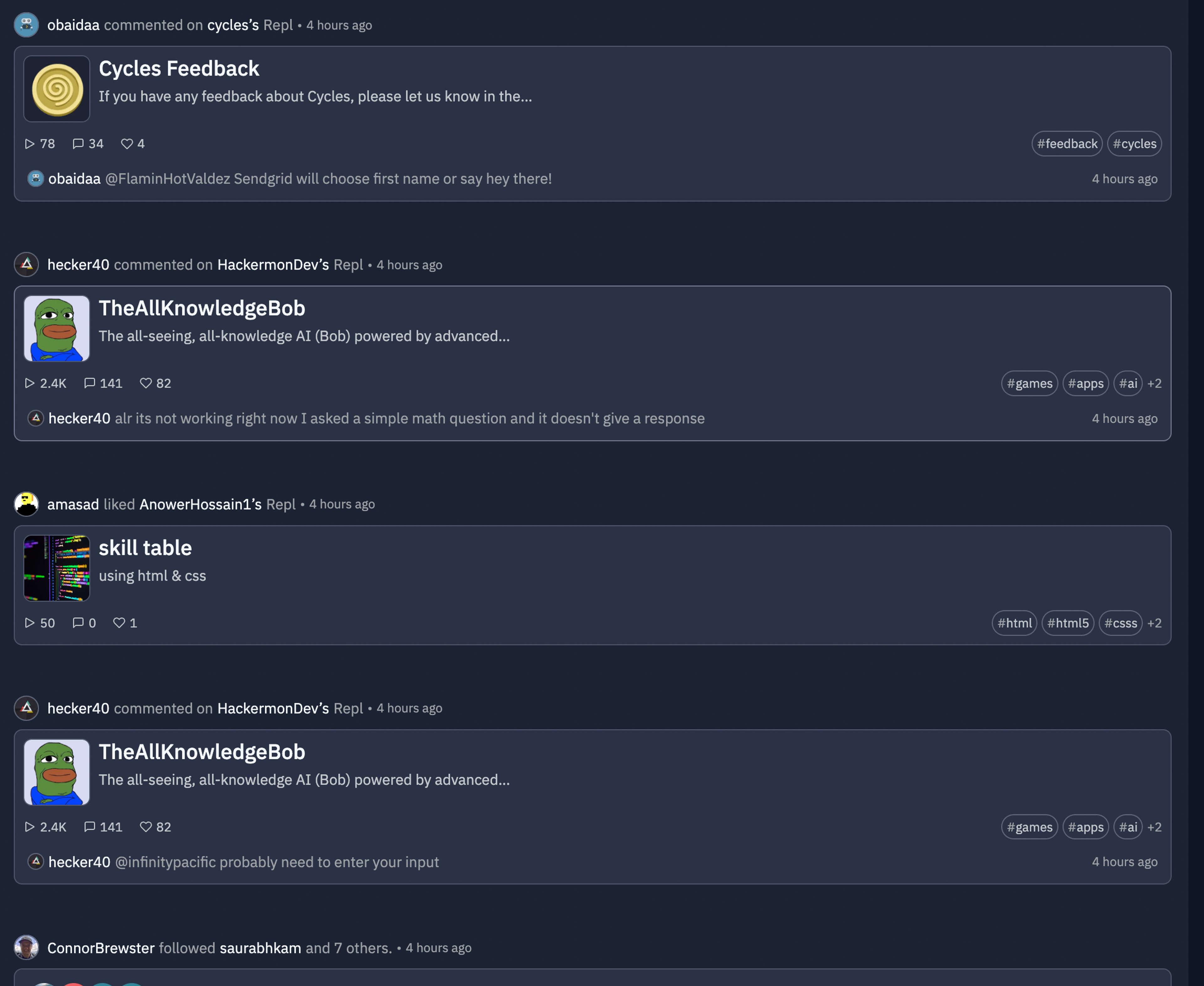
Replit wouldn't be Replit without our community. Our community is a global group of hackers, learners, educators, and entrepreneurs from all walks of life. It's extremely important to us that they have a space to share their work and collaborate with one another. Features like Search, Profiles, and Publishing were all built with the goal of making the on-platform social experience better. In the past, if someone you know shared something on Replit, it would get lost in the sea of published Repls. As our community has grown and the number of published Repls has increased, it has become increasingly difficult to discover new content and keep up with the work of your friends. This shouldn't be the case. If one of my friends publishes a cool Repl, I should know about it! Enter: Following!
 Wed, Jul 20, 2022
Revamping the GitHub Import Flow
Early last year, we made the announcement that our infrastructure and Repls now had Nix baked in. Just a few months ago, we announced all new Repls would be Nix-based. And today, we're happy to announce that our GitHub imports flow is now also powered by Nix! For a while now, the state of Git and GitHub integration within Replit has been a major pain point. One of the foremost problems was that while the rest of Replit jumped on the Nix train, repos imported from GitHub were still forced to use the old Bash style Repls. We hear you: it's frustrating not to have the ability to use our packager or to go through a convoluted multi-step import experience. While many other parts of Replit have been getting frequent updates and reworks, the code powering everything Git was left behind. It was thought that this change would be a rather significant and difficult change. The longer we pushed it off, the more adamant we became that we'd need to get it done right this time. We finally decided that enough was enough - we dove deep into actually resolving this. And after some changes, we very quickly realised that the problem was not nearly as scary as we thought. After some tinkering, your GitHub imports should now be faster and more intuitive than ever! Here's a side-by-side comparison of the two flows: