
 Wed, Feb 17, 2021
Series A to Revolutionize Computing
Our mission is to give everyone in the world computer superpowers. We build powerful yet approachable tools & platforms for developers, students, and educators. We see a new generation of hackers and entrepreneurs rising to seize the power of computers and the internet to create software that empowers them and their communities. They refuse to be programmed by the software priesthood that wants them to endlessly consume ads. Instead, they build a more free society where computers work for and under human users, not the other way around. The world we're describing is coming, and we exist to accelerate the shift. Join us! Replit is a multiplayer computing environment that makes it fun to learn how to code, build, and share apps with other people. You can create a cloud-powered computer in milliseconds -- we call them "repls" -- and you can create as many of them as you'd like, all for free. Repls come with storage for your code and files, a database for your data, and a multiplayer editor & console to code with your friends. For $7/month, you'll get more powerful machines and, with one-click, make them run forever.
 Mon, Nov 30, 2020
How Far We've Come
In early September we set out to simplify and stabilize Replit. "There's no better time to cut back than when you're growing," said Amjad. We've been working on this project in earnest for 10 weeks now. When you're in the thick of improving things all you can see is what remains undone, so it's good to look at how far you've come! Towards the end of September, we had multiple incidents where latency across Replit rose to unacceptable levels (the median request to the site could take 10 seconds). We were embarrassed. We had embarked on a stability sprint and the site felt worse. Increased load on Replit and in particular our legacy Classroom product seemed to have tipped us over a cliff. We added followers to our Postgres database and allowed people to export their classrooms into the much-more-stable Teams for Education, but it wasn't enough. We wanted to stop reacting to growth and put the web app on a solid footing. So we took the time to evenly distribute Postgres connections across all follower databases, cached the most frequently queried objects, and put rate limits in place. Since then latency has looked flat and boring. When you visit a repl, your browser opens a websocket connection to a running container. Despite this being a crucial step (if you can't connect to the container, you can't do much of anything in a repl), we had never measured how often it succeeded. The actual numbers weren't great but also weren't dire: if you tried to connect to the Replit backend in September, you would succeed 97% of the time (1 out of every 33 times you simply wouldn't connect). Now connections succeed 99.5% of the time (you'll only fail to connect 1 out of every 200 times).
 Mon, Oct 5, 2020
How Fig Shipped an MVP in Two Weeks During YC
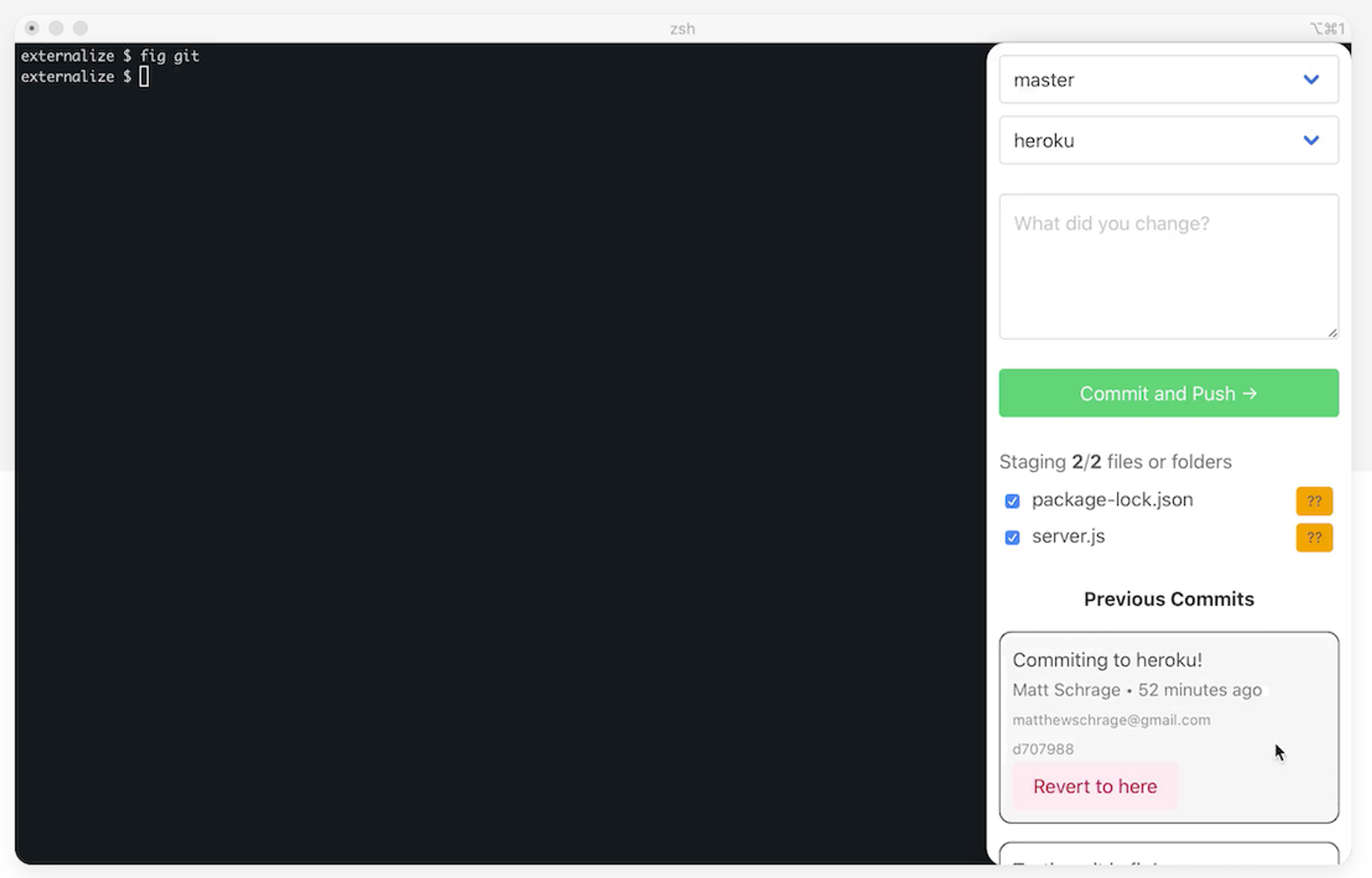
My name is Brendan Falk. I am one of the co-founders of Fig (YC S20). Fig adds visual apps and shortcuts to your Terminal. We make it easy for developers to build visual apps that streamline terminal workflows. We then let developers share apps with their team and the community. Our website gives a good demo. After going through various pivots in early 2020, we realised that the Terminal was a huge pain point for us. We wondered if we could build a tool that would make our own lives easier. But rather than creating a new terminal, we wanted to attach to our existing Terminal. In late April, we started exploring whether building a tool like Fig was even technically possible. On the 15th of May we decided to go all in on Fig. Roughly two weeks later, we had a simple MVP in users' hands. YCombinator pushes companies to move fast. Repl.it helped us move fast.
 Fri, Aug 7, 2020
The role of AI in coding
Update: To stay up to date on Replit and AI, check out our Ghostwriter Beta & AI mode announcement. In it we discuss how we infused state-of-the-art intelligence into nearly all IDE features as well as the future of AI on Replit. In the past decade, we've seen an explosion of innovation in AI and machine learning. However, coding itself was barely touched by AI. The most significant example of AI-powered coding tools is editor autocomplete extensions like Kite or Tabnine. At Repl.it, we believe this is about to change. With the advent of natural language models like GPT, for the first time, we're seeing an ML model that performs shockingly well on all sorts of language-related tasks including coding. I was first introduced to and excited by the applications of natural language models in coding when I read the 2012 paper "On the Naturalness of Software," which leveraged an incredibly simple NLP technique called n-gram to build an autocomplete engine that rivaled industry standards. GPT-3, the newest model from OpenAI, is a multiple order of magnitude in power, making it feel closer to magic. We got access to the new model, which still in beta, and we quickly got to work building coding tools: Reading code is hard! Don't you wish you could just ask the code what it does? To describe its functions, its types. And maybe... how can it be improved? Introducing: @Replit code oracle 🧙♀️ It's crazy, just got access to @OpenAI API and I already have a working product! pic.twitter.com/HX4MyH9yjm — Amjad Masad (@amasad) July 22, 2020
 Thu, Mar 19, 2020
How to Conduct Remote Interviews
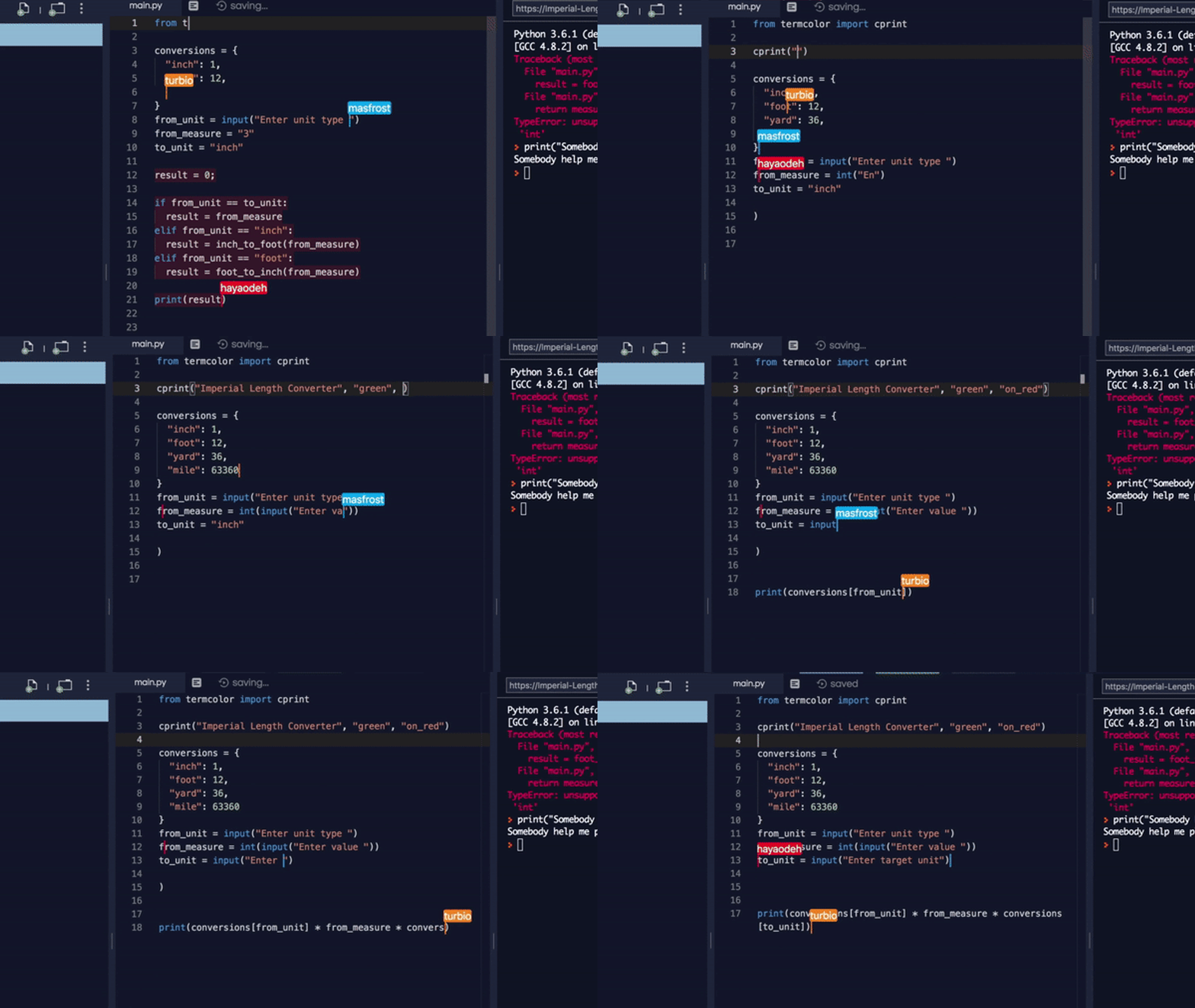
Remote interviews can be hard, especially if you’ve never done them before. With the COVID-19 crisis, we’re seeing a lot of teams forced to transition to remote interviewing. Luckily, we’ve done hundreds of remote phone screens, and more recently we’ve been doing what we’re calling “remote onsites.” In this post, we'll describe how we and some of our customers leverage Repl.it Multiplayer -- our realtime collaborative development environment -- and other tools to interview candidates remotely. The Phone Screen So much rides on programming interviews. When you're first starting as an interviewee, programming interviews can feel like a performance: you either meet or exceed the bar or you don't. That's much pressure! Teams who interview well do everything they can to put folks at ease so both sides can answer the question: are we excited to work together? At Repl.it, we want to make programming more accessible, which means making it more social, even casual. We introduced Multiplayer mode so that people can collaboratively work together on the same repl with realtime editing and running, which has been a substantial step-up from screen-sharing. Candidates can start coding in their preferred language in just a few seconds, and we can start writing tests right away in the same file. It often feels more like a collaboration session than an interview, which is an excellent sign.
 Mon, Oct 22, 2018
Repl.it raises $4.5M, announces a million users
We're thrilled to announce that we have raised a Seed round led by Andreessen Horowitz, with Marc Andreessen and Andrew Chen championing the deal. We're also sharing that a million users are now using Repl.it. Moreover, our developers have shipped 250,000 websites/apps since our hosting platform launch in March. Checkout our Soundcloud for our latest album We started Repl.it as a side project with the straightforward goal of making it easy to get a REPL for your favorite language when you need one. Coding, we believed, should be as simple as opening a new browser tab. How Repl.it looked a few years ago
- Tue, Sep 25, 2018
Rejected Then Recruited: Our Journey into Y Combinator
"The intoxicating delight of sudden understanding"1 best describes what I felt the first time I derived the Y Combinator (guided by the Little Schemer book). Learning Lisp (by way of Scheme) is how I first came about Paul Graham's essays. Which was, of course, a gateway drug to startups. Since then, Y Combinator (the company) has touched my life in so many ways. Jessica Livingston's book Founders at Work demystified startups and humanized founders for me -- suddenly starting a Silicon Valley startup seemed more approachable. My first job at a startup in the U.S was at Codecademy, a YC company, where I joined right after they graduated the summer 2011 program. And Hacker News has been daily reading for me for years; it's where I get exposed to new ideas and technologies and where I get feedback and exposure on my projects. Naturally, when I was thinking about taking the leap to start a startup, YC was top of mind. So I applied to open office hours to get feedback and see if our idea was something they'd back. Unfortunately, that particular meeting didn't go very well. The YC partner I met had the feedback that an online REPL is not really a startup -- it's just a fun toy -- and that instead, I should join another company building a superficially similar technology. But I've been waiting for someone to start this startup for years -- a website where people can not only learn how to code but can also build, collaborate with others, and ship software. In 2016 nobody seemed to be coming close to creating this. Unfazed, my cofounder Haya, who's a designer and also my wife, and I decided to quit our jobs and pursue the startup. We allocated $20k to help get it off the ground while we find a revenue model or until we raise money. We worked out of our home in Foster City and was able to monetize the service early-on by selling our code evaluation infrastructure as an API. However, the free service was always growing faster than our revenue, and it didn't seem like we were going to break even on this business model. I didn't think we would be able to raise money. In early 2016, some of my founder friends were struggling to raise capital, and I thought we'd fare no better since our startup is at the intersection of two industries -- devtools and edtech -- that have comparatively yielded minimal returns to VCs. Fortunately, someone took a chance on us. Roy Bahat, who heads up Bloomberg Beta, and whom I've met during my time at Codecademy decided to back us. With their stamp of approval, we were able to raise a comfortable seed round (or what's now probably called a pre-seed round). Around the same time, we got our first YC application rejection.
- Fri, Jan 26, 2018
Teaching refugees how to code
At Repl.it our mission is to make programming more accessible. We can’t do this alone so it’s great to partner with non-profits and hack clubs that share our mission. Re-coded is one of those non-profits, they're teaching programming in the refugee camps in Iraq and Turkey. Today I’d like to share with you their story of how they found Repl.it useful in overcoming logistical challenges. By: Gabe Jackson At Re:Coded, it’s our goal to provide a world-class education to refugees and displaced persons who would not otherwise have access to such opportunities. In making that goal a reality, we depend on a number of tools in the classroom. One of our favorites is repl.it, an in-browser IDE and REPL that we use for everything from facilitating our selection process to live coding through examples in class to creating personalized homework assignments for students.
- Tue, Aug 22, 2017
Two Stories from Our Community
Like any other startup, we go through ups and downs. However, we try to keep a positive energy, and you, my friends, contribute to that by sending your love, support, and thanks everyday. Above all, you inspire us with stories of how our product helped you learn, teach, and even develop a new skill to land a better job. Today I’d like to share with you two stories from two Replers: Ruslan a software developer from Scotland, and Mark a math teacher from Houston. Landing a self-driving job Ruslan (@kuddai), a Physics Major, wanted to land a job in doing software engineering. So he spent a lot of time practicing coding using Repl.it and eventually was able to land a new job software engineering job in the cutting edge field of self-driving! Here is him telling the story: While I was doing my M.S. in Informatics at University of Edinburgh, I realized that I lacked practice in coding interviews because my first major is in Physics. During my preparation (“Cracking coding interview”, “Algorithms by Robert Sedgewick”, hackerrank, etc.) I needed some general place to store my solutions for coding exercises. Eventually, I have chosen repl.it because:
- Tue, Jun 14, 2016
Hello World
We're excited to launch this new part of our site.[](preview end) First, we have a place to share with you all the exciting features we're building (things that don't fit in a 140 characters and a GIF). You can also look forward to posts sharing what we learn in engineering and design. Second, we're putting all the informational pages for our product and company here. This way you don't have to download tons of JavaScript that is intended for the development environment when all you want to do is read words. That'll also make it easier for Google to index our stuff. For now, you can check out our new about us page, sign up for our classroom product beta, or checkout our new languages landing pages.