
Summary
- RevOps professionals are using Replit to build custom micro tools that solve niche workflow problems without technical backgrounds.
- Teams save 90% of their time by automating tedious processes like mock data generation, CSV enrichment, and HubSpot syncing.
- Sales teams use AI-powered training simulators to practice cold calls and discovery calls, reducing ramp time from months to weeks.
- Vibe coding eliminates dependency on engineering resources, allowing go-to-market teams to iterate on solutions in hours instead of months.
- Building custom tools is becoming a core competency across sales, marketing, and operations—not just for developers anymore.
AI is eliminating the technical versus non-technical divide
Until recently, if you were a salesperson, marketer, or RevOps professional and you wanted a custom tool, you had two options: wait months for engineering to build it, or pay for a SaaS product that only gets you halfway there. Replit is changing that reality. We're now seeing non-technical professionals build production-ready applications their teams use every day.
We recently hosted a webinar featuring three go-to-market professionals who are building their own tools using vibe coding—the ability to go from idea to working application using natural language, without writing code. Their stories reveal how RevOps and sales teams are gaining autonomy and moving faster than ever before.
Building micro tools that solve real problems
Brandon Smith, Director of RevOps at Quotapath, built a mock deal generator that his sales team uses to create realistic demo environments for prospects. The tool generates deal data with customizable parameters like normal distribution curves, date ranges, and specific field configurations. It integrates with both HubSpot and Quotapath's demo workspaces.
"We actually co-built this with our head of partnerships one Friday afternoon," Brandon explained. He emphasized that neither of them are software engineers—they just understand systems and APIs from working in RevOps. What used to take hours of manual data entry now happens in seconds.
This is what Brandon calls a "micro tool"—a focused application that solves a specific workflow problem rather than trying to replace an entire software category. These tools fill the gaps that enterprise software leaves behind. They're custom-built for your exact workflow and use case.
Andrew Verrelli, a member of Replit's go-to-market team, faced a common RevOps challenge: getting lead data from multiple sources into HubSpot. Webinar signups, LinkedIn campaigns, and event registrations all arrive as CSVs that need to be enriched, mapped, assigned to sales reps, and tagged appropriately.
He built CSV Octopus to automate this entire workflow. The tool pulls data from sources like Luma, enriches contacts using Apollo, maps fields to HubSpot properties, and distributes leads among SDRs using round-robin logic. Andrew estimates it saves the team 90% of their time on lead processing.
"CSV files and JSON are still really important, but we should never be looking at them as humans," Andrew said. "They're great for AI. Let's kill the CSV as a front end."
Training sales reps faster with AI simulators
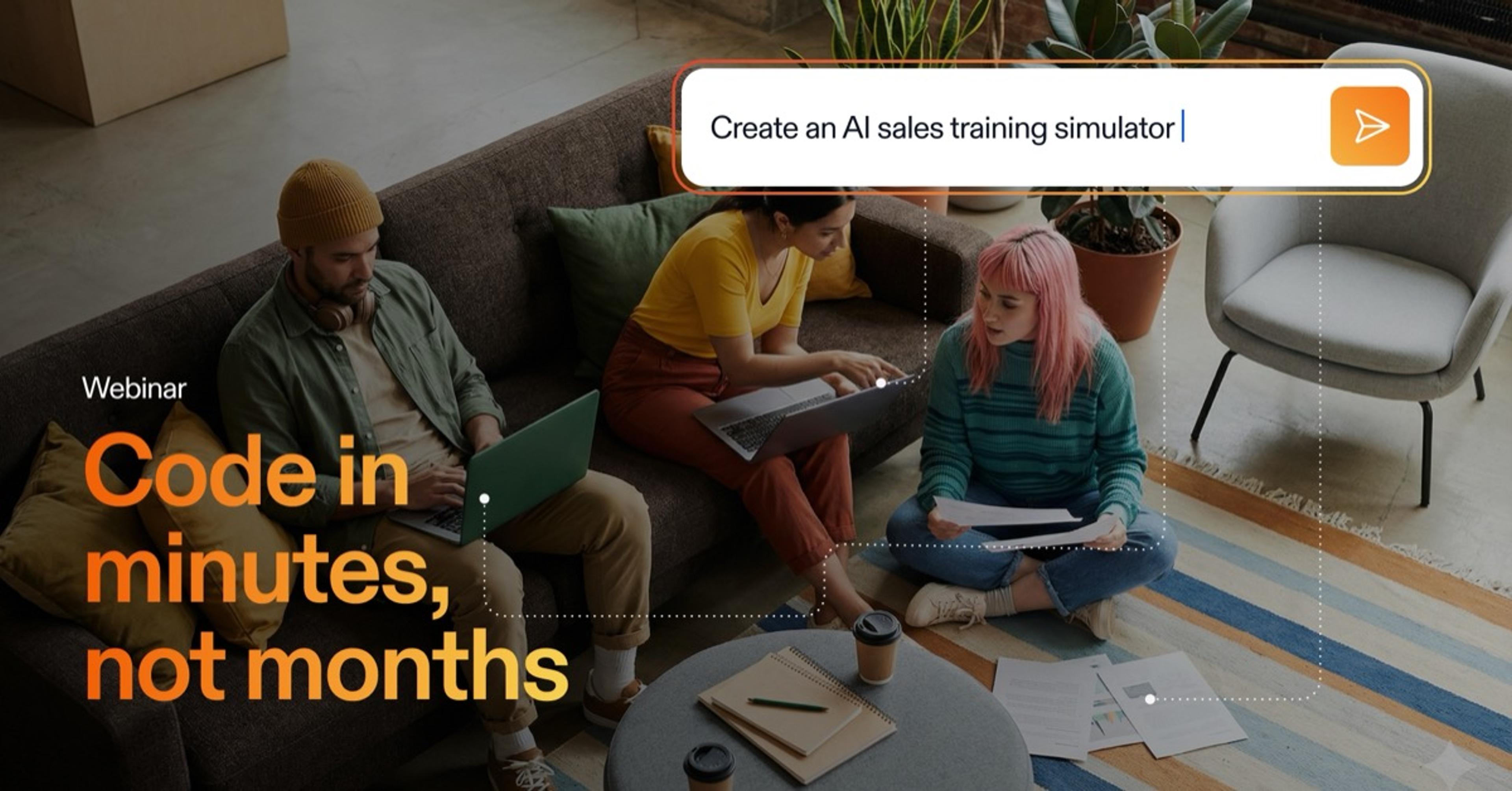
Jacob Fernow, Replit's go-to-market leader, built an AI sales training simulator in under two hours during his first two weeks at the company. The tool lets sales reps practice cold calls and discovery calls against AI personas that match Replit's actual buyer profiles.
Reps can select the buyer type, choose a sales methodology like MEDDIC or Sandler, set the difficulty level, and adjust the buyer's tone. After each simulated call, the system scores performance based on the chosen framework and provides specific coaching on pattern interrupts, value props, and objection handling.
"Really taking that three-month ramp and shrinking it into less than two weeks," Jacob said. The tool works for interview prep, new hire onboarding, and ongoing coaching. Sales leaders can even review their team's practice calls and identify areas for improvement during one-on-ones.
Jacob has no coding background—just a clear understanding of what his team needs and the ability to describe it in natural language to Replit Agent.
The build versus buy decision is shifting
The economics of building custom tools are changing rapidly. Brandon pointed out that while the gap between building and buying is narrowing, it's not about replacing core infrastructure like Salesforce, HubSpot, or Slack. It's about those micro tools and niche workflows where buying means compromising or waiting.
Consider the alternatives. Brandon's mock data generator might exist somewhere as a SaaS product, but customizing it for new features would take months. Andrew could cobble together Zapier and other tools, but then he's maintaining multiple disconnected systems. Jacob could buy an expensive sales training platform that doesn't match Replit's specific methodologies.
Building took them hours or days instead of months. They got exactly what they needed. And when they want to add features, they can do it themselves on their own timeline.
The question isn't whether to build everything yourself—it's recognizing which problems are worth solving with custom tools versus buying established solutions.
Company-wide building culture
At Quotapath, they've made building with AI a regular practice. Every Friday afternoon, the entire company—salespeople, customer success, account managers, not just engineers—gets together to build solutions.
"Even if it doesn't stick, it's at least getting people thinking about how they can build for themselves," Brandon said. This cultural shift treats building as part of regular operations rather than a special engineering project. The best ideas come from people doing the work, and now those people can implement their own solutions.
This is the pattern emerging across organizations. Teams that figure out how to build their own tools gain a significant competitive advantage. They move faster because they're not waiting on external vendors or internal engineering queues.
What you need to know to start building
None of the professionals we spoke with have software engineering backgrounds, but they share a baseline understanding that helps. You should know what an API is (a way for applications to talk to each other), understand databases at a basic level, be familiar with webhooks, and know your business tools well.
If you work in RevOps and you've customized your CRM or built reports, you probably have enough context to start. If you're in sales and you've set up automation workflows, you understand more than you think.
Andrew demonstrated using Replit's plan mode to explore options for email-sending APIs. He simply asked the AI to explain different services, compare their features, and recommend which to use. You don't need to know every available tool and integration—you just need to know enough to have a conversation with AI about what you're trying to accomplish.
"If you don't know what tools are out there but you have an idea, you can just ask Agent," Andrew said.
Making it practical with connectors
The infrastructure matters. Replit's connectors eliminate the traditional friction of connecting to external services. Instead of dealing with OAuth flows, API documentation, and credential management, you click a button, sign in, and you have access to your data.
All three builders emphasized this point. Brandon, Andrew, and Jacob could focus on solving their actual problems rather than wrestling with authentication and API complexity. You select a service like HubSpot or Salesforce, authenticate once, and build as if all that technical complexity doesn't exist.
The connector list keeps growing. Replit recently added Zendesk and continues expanding integrations based on what builders need. This infrastructure is what makes afternoon builds possible.
The path forward
The teams we spoke with are already planning their next builds. Brandon is working on a sales call coach and custom proposal builder. Andrew is refining CSV Octopus and building additional data tools. Jacob is adding sequencing tools and power dialer functionality to his training simulator.
These builds evolve incrementally. You don't build everything at once. You create what you need today, use it, learn from it, and add the next feature when it becomes important. These aren't quarterly roadmaps—they're afternoon projects that compound into sophisticated internal tools over time.
This shift is already happening. The question is whether your team is ready to embrace it. Are you still waiting for perfect solutions to appear in the SaaS marketplace? Or are you building the exact tools you need, on your timeline, for your specific workflows?
Vibe coding is becoming the new Excel—a must-have skill for knowledge work. Teams that develop this capability will move considerably faster than their competition. Not because they have better tools, but because they can create better tools whenever they need them.