
Summary
- Designer turned builder Ruth Heasman ships Spookseek AR for Replit’s mobile Buildathon, turning a Halloween AR idea into a real iOS game.
- She builds for mobile first, leaning on camera, motion sensors, haptics, sound, and AR visuals so ghost hunting feels grounded in the real room.
- Replit Agent helped her co-create a bespoke 3D system, even though she started “really clueless” about 3D math and AR stacks.
- Together they worked around Expo’s lack of ARKit, projecting ghosts on a virtual sphere and tuning targeting through a lot of iteration.
- The hardest work lands in the last twenty percent, when dev and production builds behave differently and performance problems fail silently.
- Her story is a blueprint for vibe coders who want to push through that last stretch, ship to TestFlight, and treat Replit like a creative toy shop.
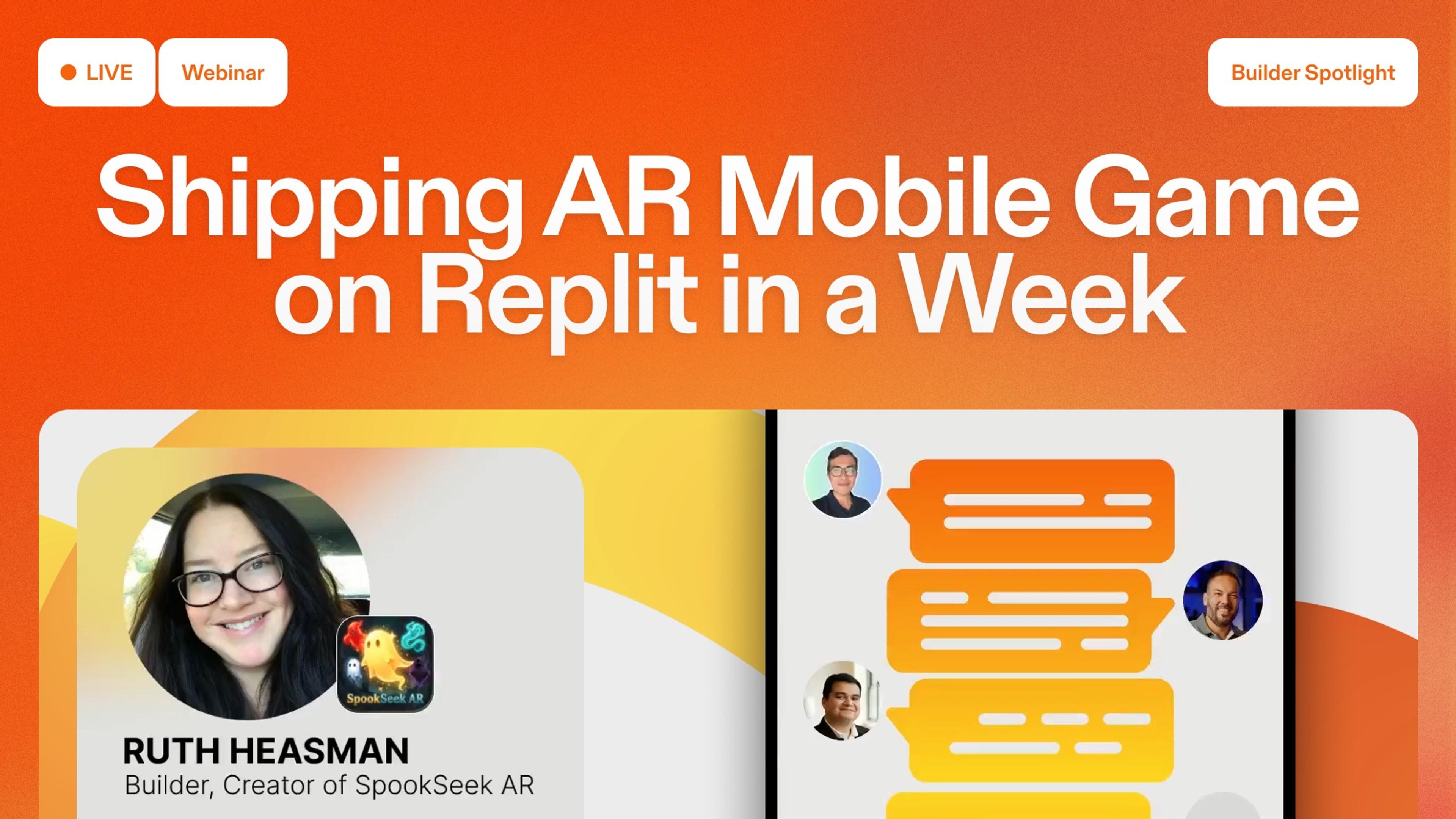
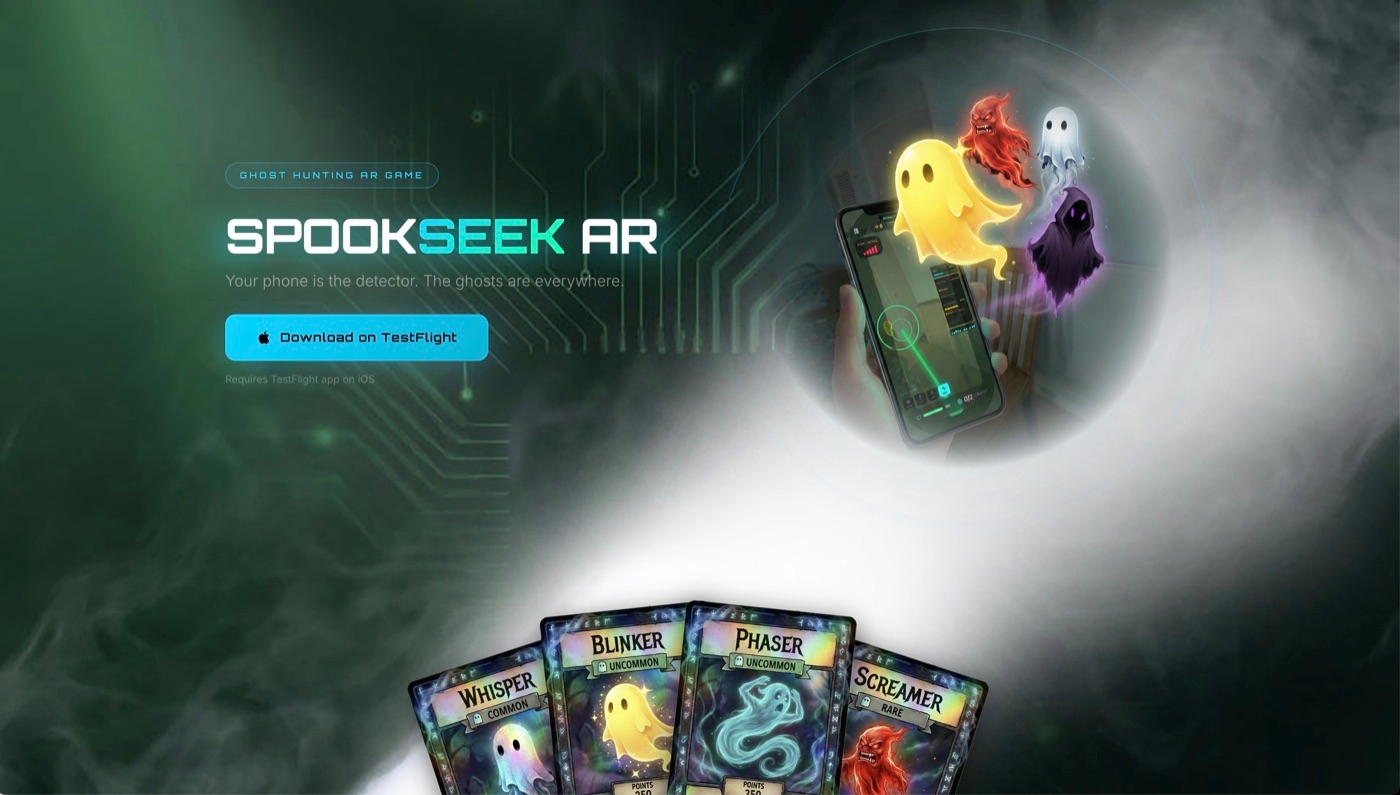
Spookseek AR, the ghost hunting game Heasman built for Replit’s mobile Buildathon, is the latest success story shared on our Builder Spotlight webinar.
Together they unpacked how she went from non‑coder to master builder, why she picked an ambitious AR idea, and how Replit Agent helped her build a bespoke 3D system that runs on real phones instead of staying stuck in a dev build.
Big takeaway: with Replit Agent and a real deadline, a nontraditional builder can go from “really clueless” to a working AR game in a week.
From designer to Replit master builder
When graphic designer Ruth Heasman first opened Replit, she wasn’t trying to become a game developer. She describes herself as “really clueless” about how hard some of this work would be and says she likes to “start from a place of ignorance and work from there.”
The real hook for her was Replit Agent. “As soon as I heard that they were gonna put an agent into Replit, I was like, oh, yes. Okay. Now I’m in.” She had held an account for a month or two without using it much. Once Agent arrived, she “hasn’t stopped since,” joking that she is “basically addicted.”
In about a year, that persistence added up. Heasman has built 20+ apps, experimented with many more, and climbed into the top 0.1% of Replit builders as a master builder. When she checked her assessment recently and saw she had leveled from four to five, her reaction was simple: “I’ve impressed myself.”
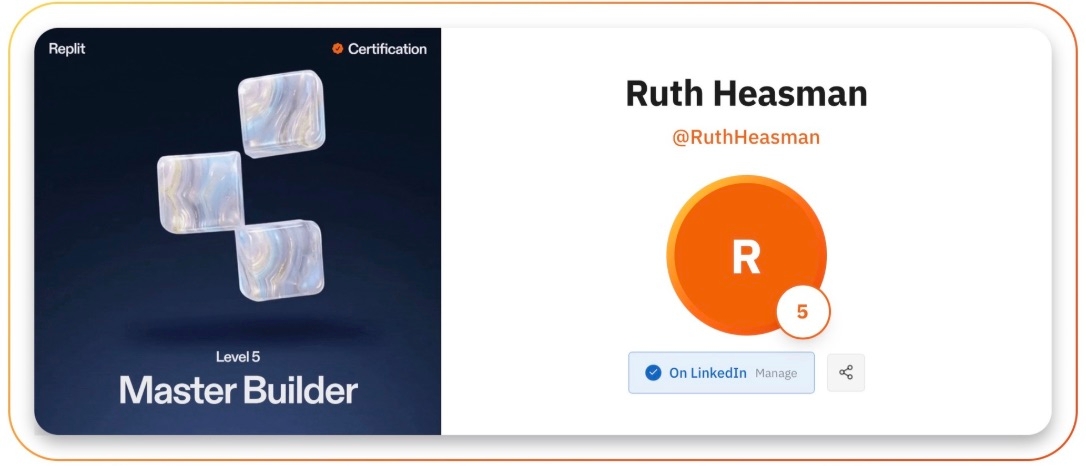
Her secret isn’t a hidden CS degree. It’s her time spent experimenting with Replit Agent, a flood of ideas, and the willingness to keep pushing through roadblocks with Agent instead of stopping at eighty percent.
Shipping Spookseek AR for the mobile Buildathon
For Replit’s mobile Buildathon, Heasman could have submitted an existing project. She already had another app, Vibe Blower, on her mind. But it “wasn’t special enough.”
So she set herself a much tougher brief:
- Use as many phone hardware features as possible, including camera, accelerometer, gyroscope, and haptics.
- Make something that truly belongs on a phone rather than on another device.
- Wrap everything in a “Halloween” aesthetic that she loves as a designer.
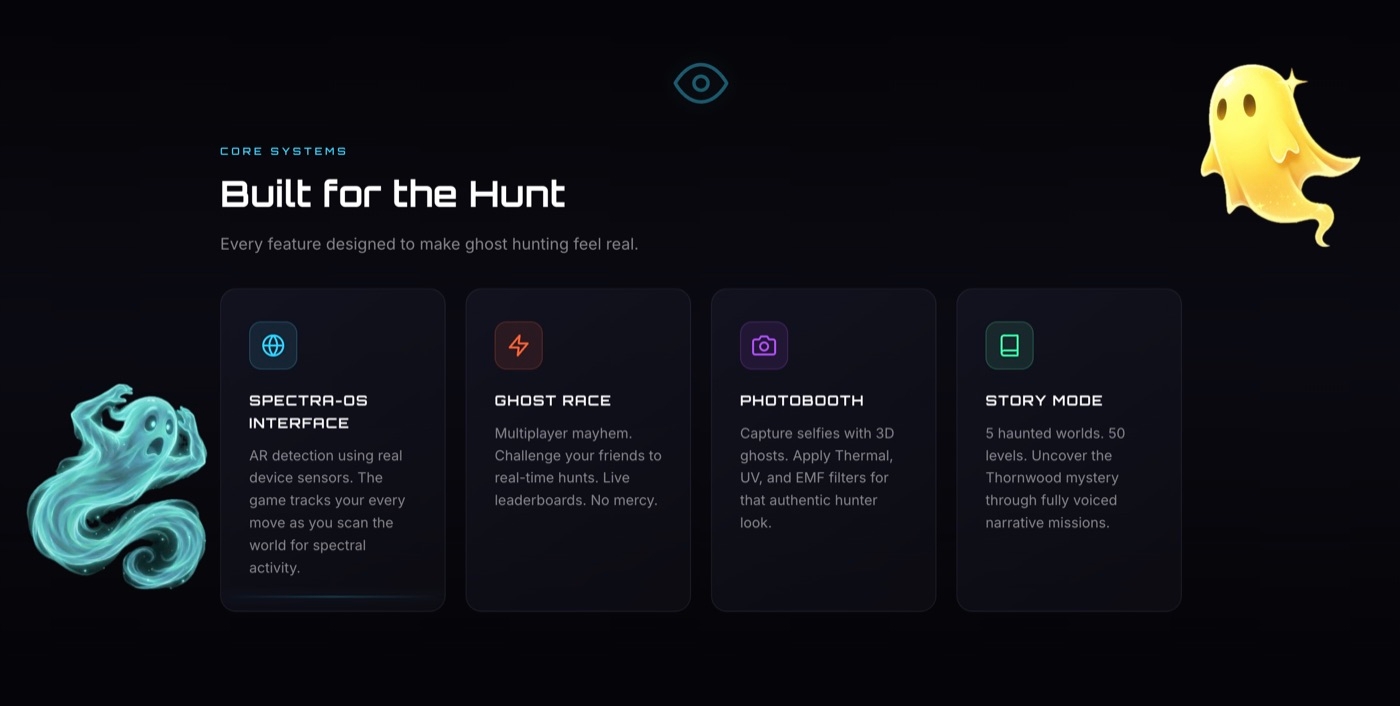
The result is Spookseek AR, an augmented reality ghost hunting game. Players move around their real space with the phone, scanning the room and tracking ghosts that float around them. Captured ghosts appear in a bestiary as holographic style cards, complete with playful visuals that feel more inviting than frightening.
Top 5 Takeaways
As a builder, Heasman was clear on her own motivations. She did not just want a mood board or a prototype. She wanted a real, shippable app: first as a public TestFlight build for the competition, then as a full App Store release. “I was really, really thrilled about making the buildathon just for the purposes of forcing me to get an app onto the App Store because, honestly, I needed that push,” Heasman says.
Building AR without ARKit, with Agent in the loop
Most iOS AR games lean on Apple’s ARKit. In this Buildathon, that path was blocked. Expo would not allow ARKit in the flow she needed, but she still had to ship a working build to TestFlight.
Instead of lowering her ambition, Heasman used Replit Agent to start designing her own lightweight 3D system from scratch.
Step by step, she:
- Chose Three.js as the foundation for rendering.
- Projected ghosts onto a virtual sphere around the player to simulate spirits floating in space around the phone.
- Tuned fields of view, angles, and camera math so aiming felt fair rather than random or frustrating.
- Built custom Fresnel style shaders so ghosts look translucent, glowing, and convincingly ghostly instead of flat.
“Basically, I had to get the agent to build me, like, an entirely bespoke 3D system,” she explains. That choice created its own complexity. Early on, the 3D models kept “sticking to the sides of the screen” instead of moving across the center, which broke her targeting system completely.
The hardest problems only showed up when she moved from the dev app to the production build. The dev app was “very forgiving” and ran more slowly. The production version on the phone ran much faster, and subtle timing issues caused things to fail without visible errors. She describes that middle stretch of the build as a “chasm” where the dev version worked and the production version “didn’t work at all.”
Like many builders, she discovered that the last 20% of polish takes at least half the time. Getting both dev and production behaving well, and getting a smooth TestFlight build, turned out to be the real test.
Throughout, Agent stayed in the loop. When she thought about rolling back at one point, “the Agent assured me that it would be fine and would just push through it,” and it eventually sorted out the mess. She also reached for external models when stuck, sending gnarlier math problems to tools like ChatGPT or Claude, but in the end “it was the Replit agent that solved it.”
One striking moment came when a bug that neither Agent nor other models could fix suddenly became solvable after a model upgrade behind the scenes. “Suddenly, Claude, like, leveled up,” she recalls. She noticed the difference in Agent’s behavior before seeing any announcements: “It could suddenly solve this problem, and it couldn’t half an hour ago.”
Making ghosts delightful instead of scary
On the visual side, Heasman approached the design of Spookseek AR to be fun and friendly rather than scary. She loves the Halloween aesthetic, but she didn’t want the game to feel exclusive or too intense. The target audience is “everybody,” with a rough floor around age twelve.
She went through multiple iterations of ghost designs. Early ghosts looked more realistic and “a bit severe.” That wasn’t the vibe she wanted. Spookseek AR needed to feel like “fun ghost hunt, not too serious, not too heavy.” After several passes, she landed on the current batch of friendlier, more playful ghosts.
As players capture ghosts, they appear in a bestiary as collectible cards. Here, her love of Bitcoin and NFTs showed up in the art direction. The cards have a holographic feel and treat each ghost like a unique character rather than a generic asset. As she puts it, the graphic design side of the work “is just joy.”
Sound and interaction were just as important. She wanted “lots of interactivity, so lots of sound” and layered in music plus character lines. She used tools like Suno and ElevenLabs to generate voices and audio moments that fit the story mode. Those layers help the experience feel alive even when you are just pacing through your own kitchen hunting for ghosts.
Shipping fast while learning in public
Spookseek AR was not built in a sprawling two year timeline with a large team. Heasman built it in a single week.
That pace came with some sleep deprivation and even a little hallucination of her own. After enough late night play tests, she started “seeing ghosts out the corner of my eyes” while walking around the house and had to force herself to put the phone down.
The Buildathon deadline was key. She describes the event as exactly the kind of accountability she needed: “The deadline is perfect, isn’t it?” The sprint format made it easier to accept a week of intense effort in exchange for a finished, self contained experience that can live on phones without constant reinvention.
Even as she shipped, she kept sharing the journey. She recorded gameplay, built trailers and background loops in tools like Gemini and CapCut, and posted a behind the scenes write up about the hardest technical issues she faced and how she resolved them. For her, that is part of the story. “It’s interesting to see how badly it can be going wrong and still come right at the end,” Heasman says.
Building a personal tool stack on Replit
Spookseek AR sits on top of a broader creative stack Heasman has been building for herself.
She experiments widely with AI tools. She has tried Claude Code, Google’s AI Studio, Lovable, and other platforms. That curiosity helps her spot strengths and gaps. In her view, “all the other platforms that I tried are deficient in some way,” especially when you want databases, storage, authentication, and deployment all in one place.
Replit is where it all comes together. In earlier projects she had to wire up third party auth or payments directly, which took weeks even with AI help. Now she prefers to use Replit’s built in auth and Stripe integrations rather than “go out and set up accounts and try and set up the service manually.”
Beyond shipping full apps, she uses Replit as a general purpose creativity console. She codes directly on an iPad much of the time and treats Replit as an interface into powerful models that can generate images, scripts, and project scaffolds. “It’s so flexible and so useful,” she says. “I use Replit as a productivity tool, not always to build an app, sometimes to make assets or just sort of think something through.”
That same mindset powers internal tools like Brandcaster, which analyzes a site and assets to generate brand docs and social visuals, and Mint Page, which uses Nano Banana Pro to generate bold landing page concepts and code. She often builds these tools for herself first, then considers productizing them later.
On top of all this, she cares deeply about user privacy and experience. With Spookseek AR, she wanted something “self contained” that does not depend on constant API calls to large models, avoids monthly subscriptions, and does not ask for logins or personal data. The app runs locally on the phone without storing or transmitting user information. When she eventually adds a paywall, she expects it to be a simple one time unlock.
What builders can learn from Heasman’s week with ghosts
Heasman’s story is a clear snapshot of what’s possible in the vibe coding era:
- She came in as a designer, leaned on Replit Agent to handle the math and engine work.
- Brought a strong sense of taste to visuals, sound, and experience.
- Stayed honest about what she didn’t know, and let persistence plus better tools close the gap.
For other builders, the lesson is straightforward. Pick a problem you care about enough to fight through the last 20%.
Use Replit Agent and the surrounding tooling to take on work that would have been unreachable a year ago. Treat the platform like the “toy shop” she describes, and you may surprise yourself with what you can ship in a single week.
Watch the full webinar
AI disclaimer: This post was originally drafted using an AI-generated summary of a video transcript and subsequently reviewed and edited by a member of our content team for accuracy and clarity.