
Summary
- This post recaps part 2 of our "Live from HQ" livestream series covering the Agent 4 launch.
- Peter engineered Agent 4's parallel task system, enabling AI to resolve merge conflicts automatically 90% of the time.
- Haya Odeh, co-founder and design lead, built the Infinite Canvas to close the gap between design and engineering.
- Jacob's collaboration features give builders real-time visibility into who's working on what inside a shared project.
- Adi made branching feel instant using micro VMs, creating isolated task environments that spin up in seconds.
- CEO Amjad Masad framed Agent 4 as the point where any builder can go from idea to shipped product.
- Real-world results back it up: one company saved over $1 million annually using Replit to automate marketing tasks.
Intro
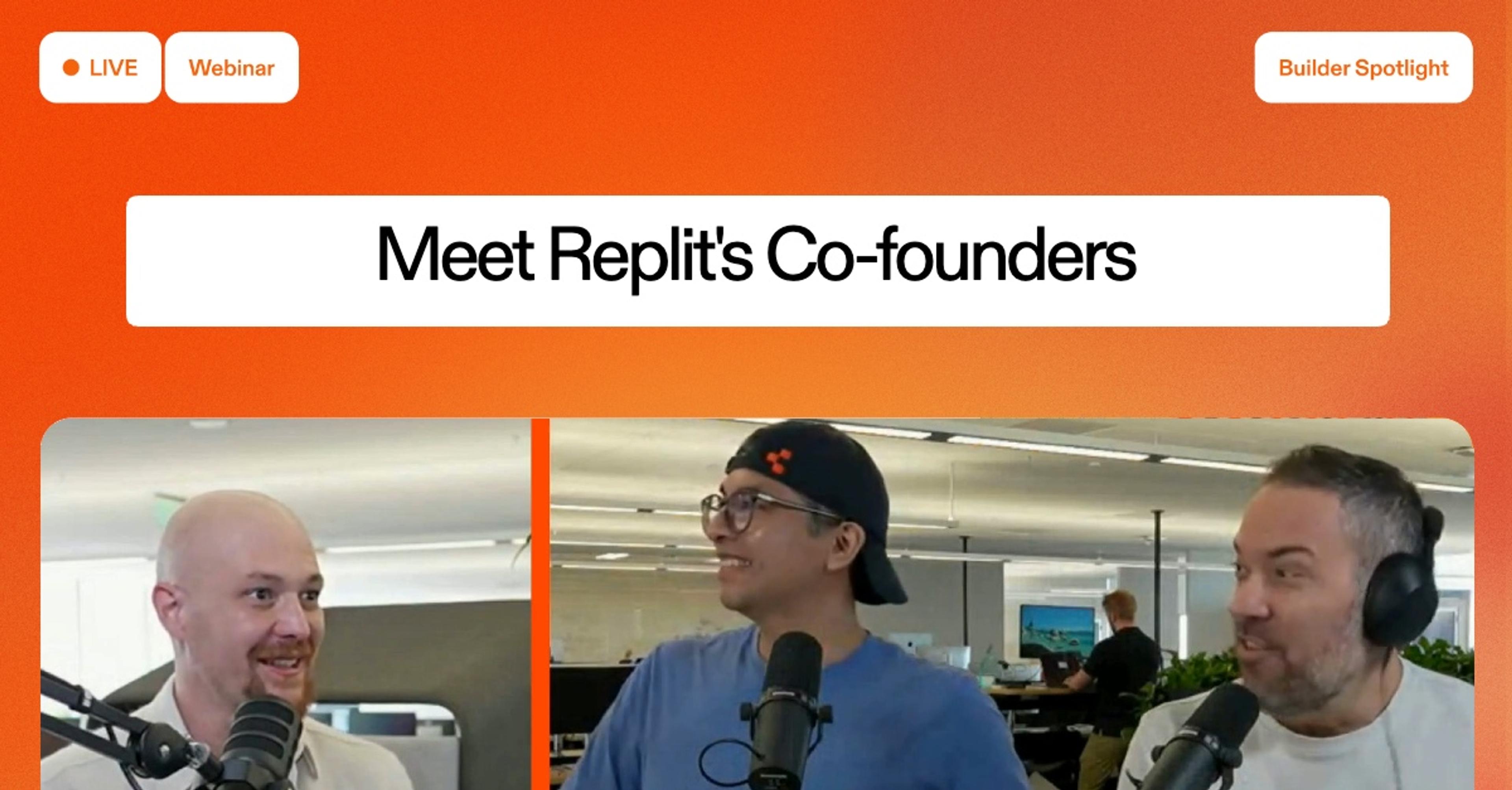
In the second part of our "Live from HQ" livestream series, five members of the team — including co-founders Haya Odeh and Amjad Masad — pull back the curtain on how Agent 4 actually comes together. From the engineering behind parallel tasks and instant branching to the design vision that makes collaboration feel natural, this is a closer look at what we built, why we built it, and what it unlocks for every builder on the platform.
Peter: the engineering behind parallel tasks
Peter is an AI engineer on our team who worked on one of the hardest pieces of Agent 4: merge conflict resolution across multiple parallel tasks.
When two agents work on different parts of the same project and bring their changes back together, there's a chance they've touched the same file, the same function, the same component. Resolving that intelligently — in a way that matches what the builder actually intended — is hard.
Peter's take: it became solvable because coding models crossed a capability threshold. They got good enough at understanding what each branch was trying to do and resolving conflicts the way a developer would. Not perfectly every time, but well enough that the last 10% of edge cases can be surfaced to the builder for a quick decision, while 90% resolves automatically.
He also walked through orchestration. When you launch multiple tasks in parallel, the agent reasons about the right order first. An admin panel doesn't make sense before there's a login system. Agent 4 figures out those dependencies upfront, sequences them, then runs in parallel where it can.
On why Replit doesn't let users pick their own model:
"It's a combination of models that we try to optimize for in a cross-model experience sort of way."
What looks like one agent is actually a pipeline of specialized models — one for exploration, one for testing, one for the sub-agents handling parallelism. The economy, pro, and power modes give builders some control over the mix. The orchestration underneath stays with us.
Haya Odeh: on where this started
Haya, our co-founder and vp of design, talked about the original friction between design and software: you make something in a design tool, hand it to an engineer, and something always gets lost. The source of truth is always contested.
With the Infinite Canvas, that tension is starting to close. A designer can now prototype in the same environment where engineers build. The code is the same code. The prototype is the actual product.
On the brand refresh and who Replit is for, Haya talked about the range of people she meets building in Replit: fashion designers, nutritionists, chefs. People from everywhere.
"I don't want it to feel like it's just for programmers. It's actually for me."
The mission, she said, has always been the same. Give everyone the tools to build what they're dreaming about. For a long time, that required coding. Now it doesn't have to.
Jacob: you can finally see who's in your project
Jacob is a product designer on our team who worked on collaboration for the Agent 4 launch. His headline: for the first time, you can actually see who's in your project.
Before Agent 4, collaborating meant everyone was in the same chat thread. Tasks stepped on each other. There was no visibility into who was working on what. The only signal was the output.
Agent 4 changes that. You can see who's on which task, what's been merged to main, and what's still in progress. It works the way a Google Doc works for writing, but for software — you can hop into a teammate's task and review what they're building before anything touches main.
On pricing: we don't charge per seat for collaborators. You can bring people into a core or pro project without adding a seat cost. Bring in a specialist for one session, add more seats later if you need to. Jacob put it simply: we didn't want people to feel limited by who they invite in.
Adi: making branching feel obvious
Adi is a design engineer who worked on our collaboration and background agent features. The job: take something that's been technically complex for decades — branching and merging in version control — and make it feel natural inside Replit.
The core mechanic: when you start a new task in Agent 4, we create an isolated copy of your project in the cloud. The agent works in that copy without touching your main version. When you're happy, you apply the changes back. If you're not, you abandon it.
"You try not to leave those branches hanging around for too long so they don't get too stale. You're always kind of syncing up with your other agents or your collaborators."
When you click new task, that isolated environment spins up fast enough to feel instant. That speed is the product. Slow branching kills the flow. The technology making it possible: micro VMs.
Amjad Masad: delivering on our mission with Agent 4
Amjad, our CEO and co-founder, talked about what it felt like to have been working toward this moment for years.
He's been trying to build businesses since he was 13. What always held him back wasn't the idea or the hustle. It was the friction. Software development kept getting harder through the mid-2010s — standing up a basic website required React and Webpack and a long list of things that had nothing to do with the actual idea.
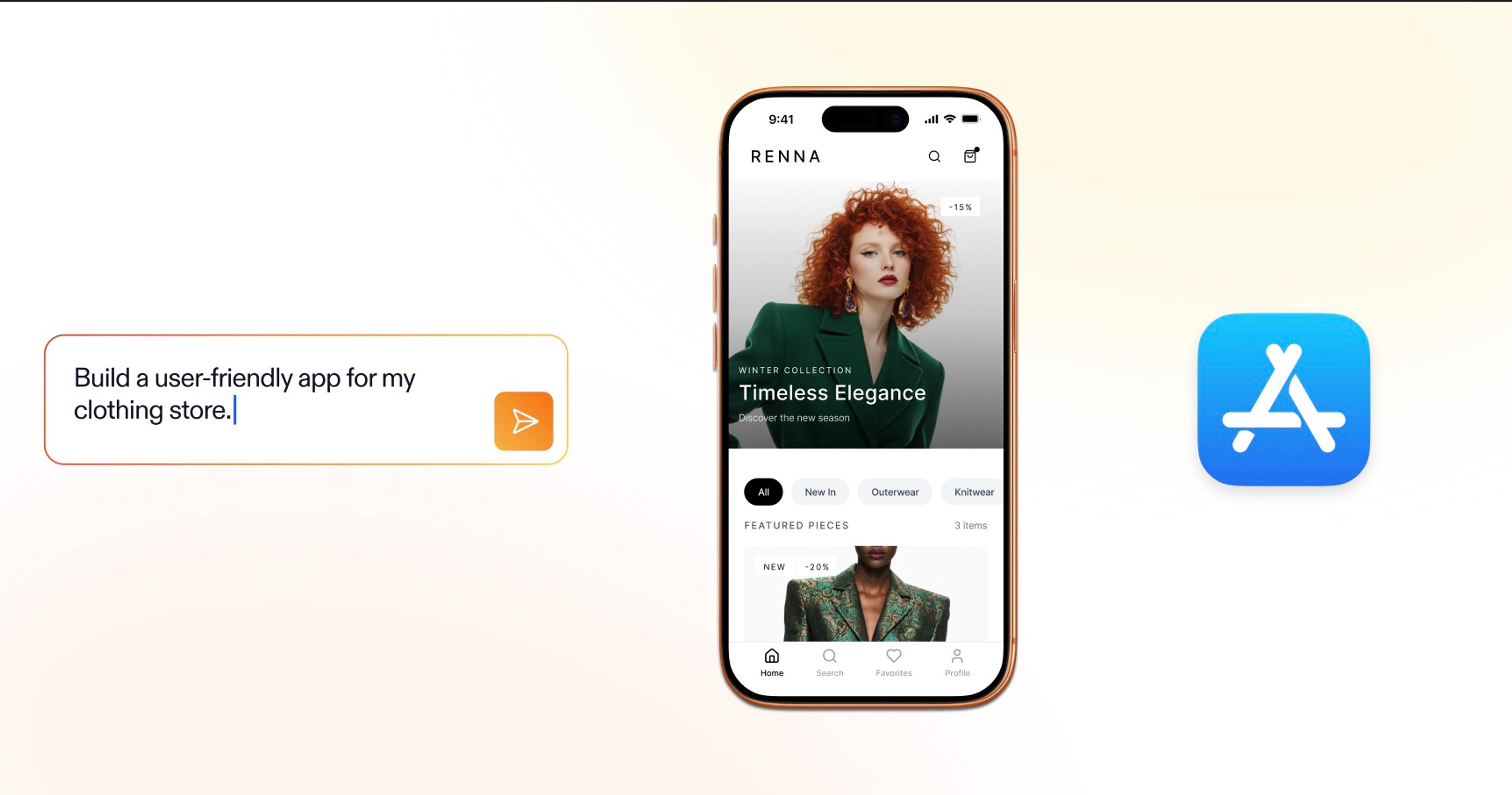
Replit removed the friction from starting a programming environment. Then from deployment. Then AI made coding itself less of a blocker. Agent 4 is the point where you can come in with any idea and not have to leave. Prototype to mobile app to marketing site to launch video to monetization, all in one place.
On the jobs question:
"You can look at the glass half empty and just say companies get efficient and some people lose their job. But the half-full thing is it's a shift from people who are not adapting to the future towards people who are really excited about these tools and want to contribute to the company in more than just their immediate job."
He pointed to FireCrown Media, a $60 million media company, as a real example. They used Replit to build marketing automation, saved over $1 million a year in overhead, then used some of those savings to hire AI-native talent in roles that didn't exist before.
His take on builders starting fresh with no prior coding habits: they might have an advantage right now. They'll learn with these tools instead of trying to adapt old workflows to a new environment.
Why this matters for builders
Agent 4 is a complete workspace where you can go from idea to product, and now, with the team that's building with you.
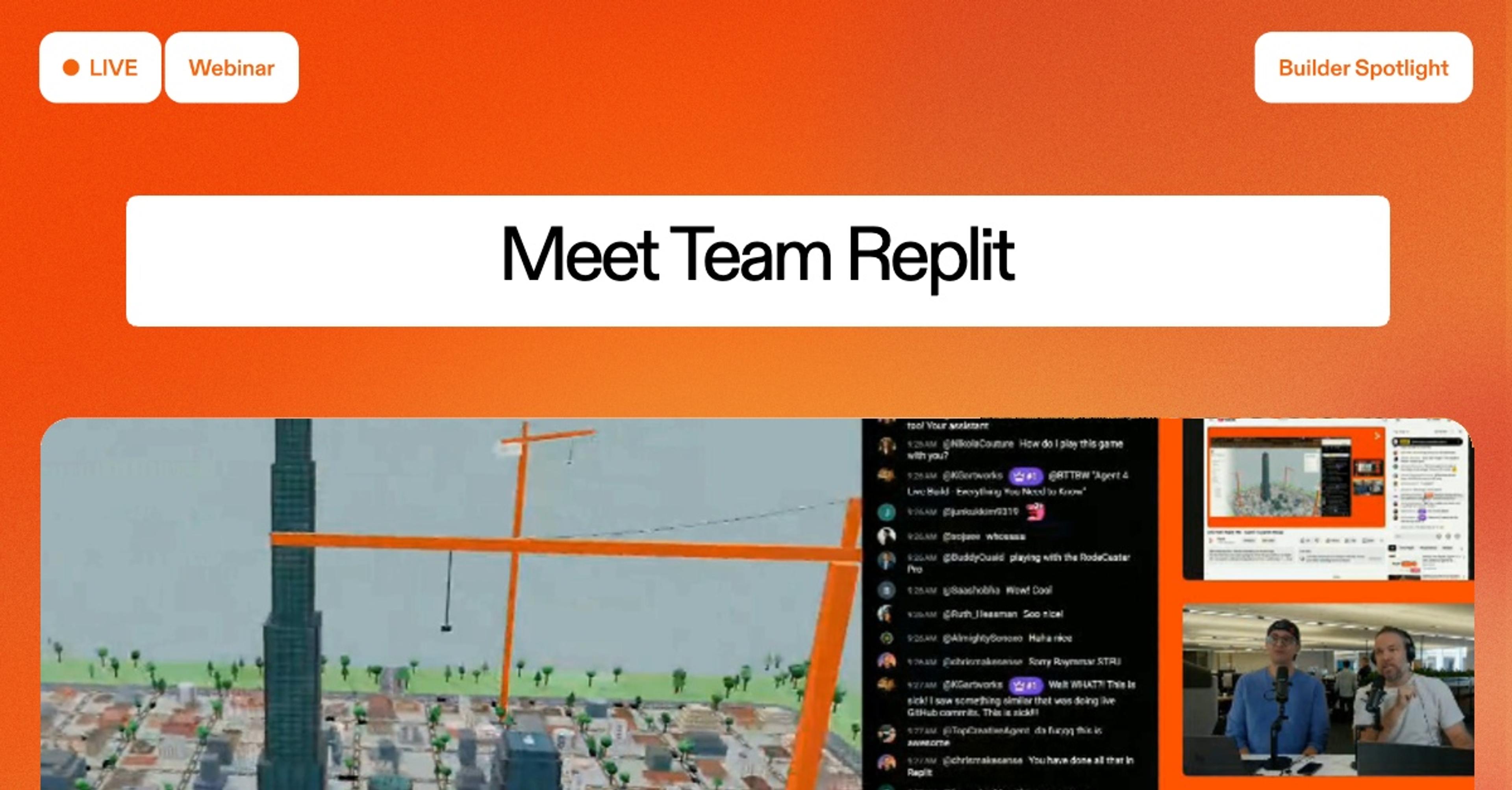
Everything the team demoed on stream points to the same thing. Manny built a landing page, a web app, and a mobile app inside one project on the Infinite Canvas. Raymmar pulled live company data from BigQuery and turned it into a 3D city. Adi and Jacob made version control and collaboration feel like something anyone can do. Amjad connected it all back to a mission that's been the same since day one: give everyone the tools to build what they're dreaming about.
With the same workspace you already use for apps and sites, you can:
- Build and ship with your whole team. Collaborate across backgrounds and roles without anyone stepping on each other's work.
- See the whole picture. The Infinite Canvas, parallel tasks, and live visibility into who's working on what means fewer surprises and faster decisions.
- Go further, faster. From a taste-development app on mobile to a live city visualization on BigQuery — the ceiling keeps moving up.
Want to go deeper on what's new? Read the full Agent 4 announcement for everything that shipped.
Watch the full stream
AI disclaimer: This post was originally drafted using an AI-generated summary of a video transcript and subsequently reviewed and edited by a member of our content team for accuracy and clarity.