
This is part 1 of a 6-part series we’re running about how product managers are using AI tools and vibe coding. Written by and for product managers.
Summary
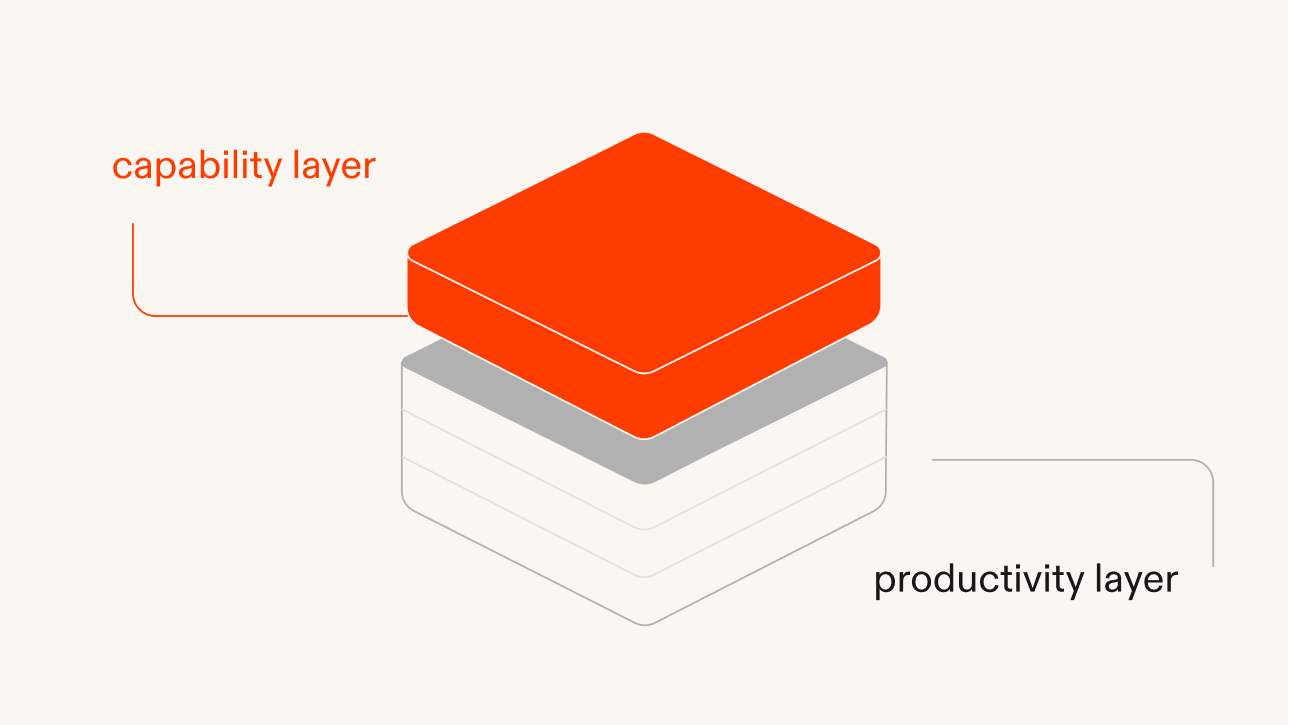
- AI tools for product managers now operate across two layers: a productivity layer and an expanded capability layer.
- Writing tools like Claude, Notion AI, and Grammarly help you draft PRDs and condense research into clear summaries faster.
- Research tools like Dovetail and Perplexity surface patterns across interviews and feedback, making continuous discovery more manageable.
- Roadmapping platforms like Productboard and Linear use AI to cluster feedback, score features, and generate stakeholder updates automatically.
- Vibe coding shrinks the gap between idea and working artifact, letting builders prototype and validate without waiting on engineering.
- Replit Agent 4 lets you move from product intent to working software inside a single integrated build, run, and ship environment.
Product management has always been a role defined by constraints. Limited time. Limited engineering capacity. Endless decisions competing for attention. Over the past few years, AI has started to shift that balance. New tools are showing up everywhere in the product workflow. Helping draft PRDs, summarize research, analyze feedback, and prepare stakeholder updates.
But the rapid rise of AI has also created confusion. The landscape is crowded and it is not always clear which tools genuinely improve the way PMs work and which simply add another layer of noise.
This article takes a practical look at the best AI tools for product managers 2026 and explains how they fit into the modern PM workflow. It also introduces a new category that is beginning to change what PMs can actually build themselves.
How AI is reshaping the PM role
Product management has always been a coordination heavy role. PMs sit in the middle of product discovery, stakeholder alignment, and delivery execution. That often means juggling more decisions than time allows. Reviewing research, writing documentation, prioritizing features, preparing updates, and constantly translating between teams.
AI is beginning to reshape how that work happens.
Early AI tools mostly appeared around the edges of the PM workflow. Helping draft documents, summarize interviews, or generate meeting notes. Those capabilities alone can remove hours of repetitive work every week.
But a deeper shift is now underway. The newest wave of AI product management tools is moving beyond simple productivity gains. Some tools still help PMs complete existing tasks faster. Others are starting to expand what PMs can do themselves.
It is useful to think of these as two layers.
A productivity layer that accelerates everyday work. And a capability layer that allows PMs to create and test product ideas more directly.
The sections that follow explore both.
AI writing and communication tools
Much of a product manager’s week is spent communicating. Writing PRDs, summarizing user interviews, preparing release notes, or translating product decisions for different audiences. AI writing tools have quickly become some of the most widely adopted AI tools for PMs because they reduce the time spent on this documentation layer.
Tools like Claude, Notion AI, and Grammarly now act as everyday assistants. They help generate first drafts of long documents, condense research notes into clear summaries, and translate technical concepts into language executives or cross functional partners can quickly understand.
[IMAGE: screen shot of a PRD in a Grammarly doc]
For PMs working across multiple teams, this alone can save hours each week.
In my own workflow, I often use tools like ChatGPT to quickly structure the first draft of product notes or PRD outlines before refining them myself. It doesn’t replace the thinking, but it removes the blank page problem and makes it easier to start shaping the idea. 👈
But these tools reveal an important limitation. They accelerate communication, not product creation. A well written PRD still needs design to visualize it and engineering to build it. AI speeds up the paperwork around product development. The product itself still depends on the same downstream teams.

[Download our Top 10 Prompts every PM should have]
AI research and insight tools
Another area where AI is quietly changing the daily work of product managers is research synthesis. PMs sit close to a constant stream of information. User interviews, support tickets, survey responses, usage analytics, and competitive signals. The challenge has never been access to data. It has been turning that volume into clear insight.
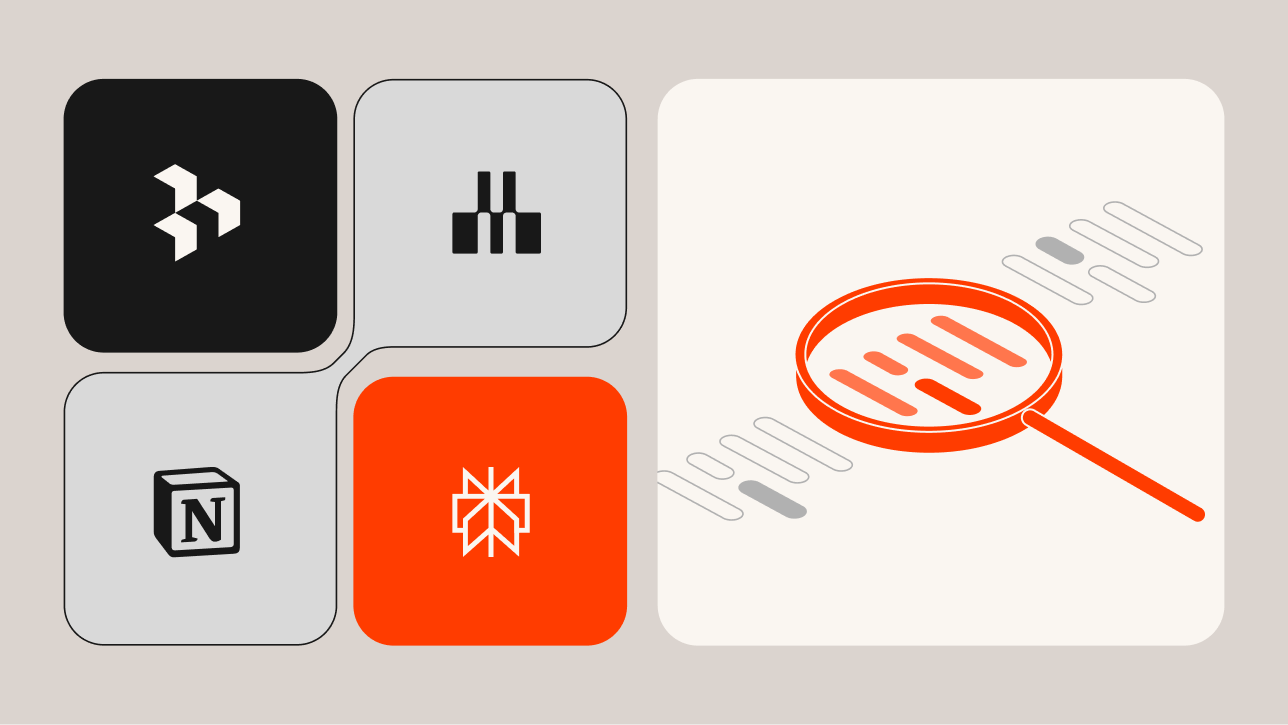
Tools like Dovetail, Maze, Notion AI, and Perplexity are increasingly used to help PMs surface patterns faster. Tools can now summarize interview transcripts in minutes. Feedback themes can be clustered automatically. Competitive analysis that once required hours of manual searching can now be generated quickly.
These AI product management tools make continuous discovery far more manageable at scale.
In my own work, I’ve used these tools when working through large volumes of interview notes and support conversations. AI helped cluster recurring themes quickly, which made it easier to see where user frustrations were actually concentrating. It didn’t replace interpretation, but it significantly shortened the time needed to move from raw feedback to meaningful patterns. 👈
Yet the same structural pattern appears again. AI can surface insight faster, but insight alone does not change the product. Someone still needs to translate those insights into direction, design the experience, and build the product. The thinking cycle speeds up. The product cycle remains largely unchanged.
AI roadmapping and prioritization tools
Roadmapping is where product decisions become visible to the rest of the organization. It is where ideas are prioritized, tradeoffs are communicated, and teams align around what gets built next. AI is now starting to support this layer of work as well.
Platforms like Productboard, Aha!, Linear, and Jira are introducing AI capabilities that help PMs organize and evaluate incoming work. Customer feedback can be clustered automatically. Feature requests can be scored against predefined criteria. Roadmap summaries and updates can be generated for different stakeholder groups.
These tools make it easier to maintain a living roadmap and communicate priorities clearly across teams.
But once again the pattern holds. These systems organize the work more effectively, yet they do not shorten the distance between an idea and a working product. The core loop still looks the same. Idea, brief, design exploration, engineering implementation, then finally user feedback.
AI helps manage the workflow. It does not fundamentally change it.
AI meeting and collaboration tools
Product managers spend a surprising amount of time in meetings. Sprint planning, stakeholder reviews, customer interviews, and cross team alignment sessions can quickly fill the calendar. AI meeting assistants are increasingly helping reduce the overhead around those conversations.
Tools such as Granola, Otter.ai, Fireflies, and Google Gemini can now automatically transcribe discussions, generate summaries, and extract action items. Instead of scrambling to capture notes while facilitating the conversation, PMs can focus on the discussion itself.
The benefit is simple but meaningful. Less time spent documenting meetings and more time spent following through on the decisions that come out of them.
The productivity ceiling
Taken together, these tools represent real progress. Most product managers today rely on at least some of them. AI writing assistants reduce documentation effort. Research tools surface insight faster. Roadmapping platforms organize priorities more effectively. Meeting assistants remove the friction of note taking.
Each of these improvements matters. But they share the same limitation. They make the existing product workflow faster without fundamentally changing its structure.
The dependency chain remains intact. A PM still writes the brief. Design translates the idea into something visual. Engineering turns it into working software. QA ensures it is stable before it reaches users.
AI has accelerated many steps around this process, but the core loop has stayed largely the same.
Which raises an interesting question. What if AI could reduce some of those handoffs instead of just speeding them up?
The emerging category that goes further — vibe coding
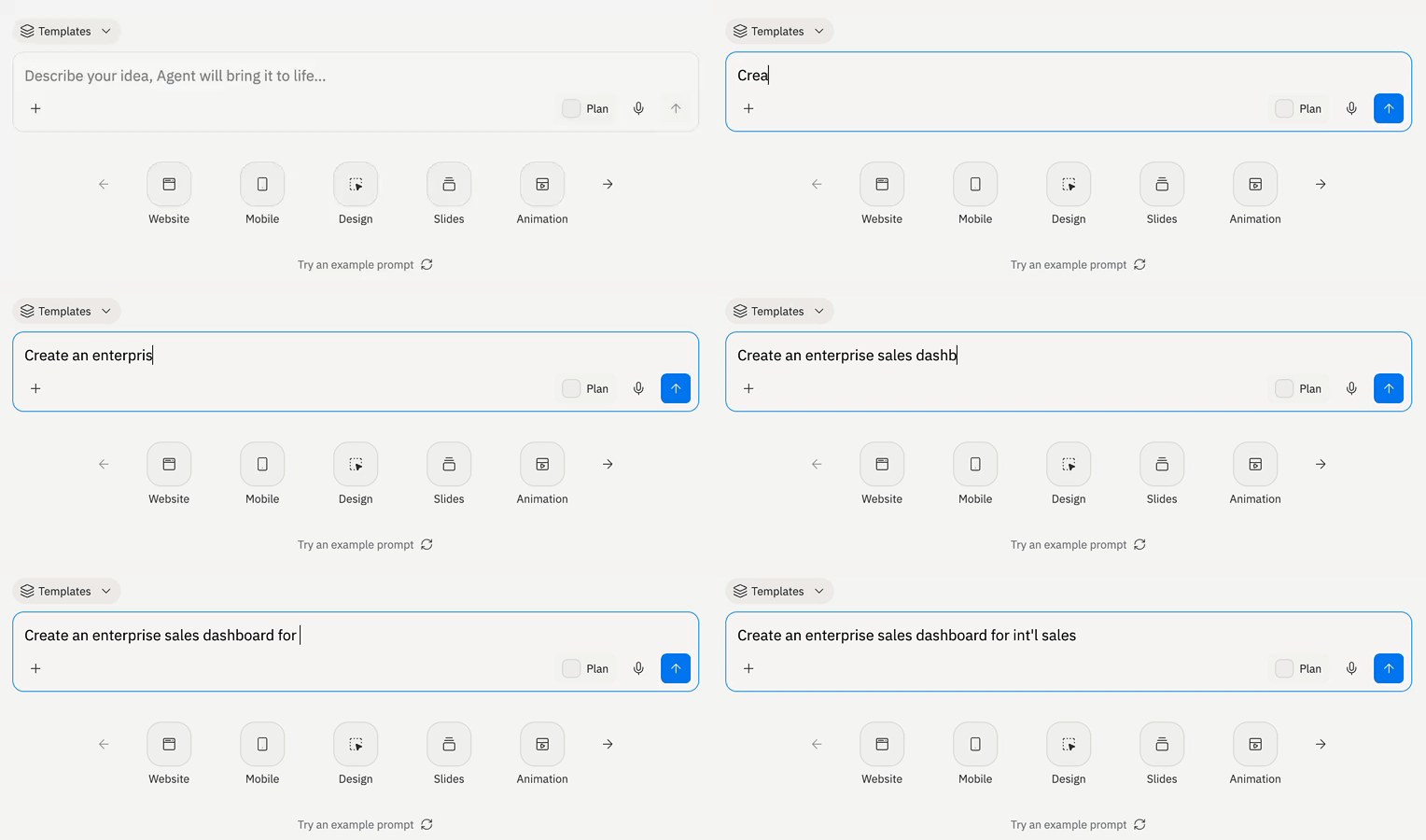
Vibe coding is a relatively new category of AI tool that is beginning to change that dynamic. Vibe coding allows software to be created by describing intent in natural language rather than writing code line by line.
At its core, vibe coding is about directing the system. Instead of producing documentation that someone else later interprets, you describe what you want the product to do and the system generates a working version of it.
For product managers, this unlocks a different kind of leverage. PMs can:
- Create interactive prototypes to test a product idea with users
- Build internal dashboards to explore data questions without waiting for engineering capacity.
- Generate demo-ready product flows for leadership reviews or sales enablement. Even early UI variations can be explored before formally involving a design team.
In other words, the distance between idea and artifact becomes shorter. This shift plays directly to a skill PMs already have. From my perspective as a PM this feels like a natural extension of the role. The job has always required clear articulation of intent. A good product brief describes behavior, constraints, and outcomes precisely. Vibe coding simply turns that same clarity into prompts that generate working software. 👈
The category is still early, but vibe coding for product managers is already becoming a practical way to explore and validate ideas before committing engineering resources.
How Replit Agent 4 defines this category
One of the platforms pushing this category forward is Replit. While many AI tools generate isolated code snippets, Replit Agent 4 lets teams work across the full environment where software is created, run, and improved.
That distinction matters for product teams trying to move faster.
In many workflows today, teams jump between tools just to describe an idea, generate code, run the application, and iterate on it. With Agent 4, PMs can work inside a single environment where product intent quickly turns into working functionality while many repetitive steps involved in building and maintaining software are handled automatically.
In practice this leads to tighter iteration loops. A product manager can describe a feature, see a working version of it, adjust the behavior, and test the flow again within the same session. That reduces context switching and allows more progress to happen in a single working block.
Another useful aspect is the ability to explore variations without disrupting the existing application. PMs can experiment with new flows, UI changes, or internal tooling ideas while the core project continues running.
This shift toward direct experimentation is something I have been exploring personally as well. Using Replit, I’ve built projects like WeCanBe and StoriLeaf as working platforms rather than just conceptual prototypes. The ability to move from idea to something functional without a full engineering cycle changes how quickly product ideas can be explored and refined. 👈
Seen through that lens, Replit Agent 4 represents what the vibe coding for product managers category looks like when the entire build, run, and ship workflow is integrated into one place.
How to think about building your AI stack as a PM
For most product managers, the question is no longer whether to use AI. The real question is how to integrate it thoughtfully into the product workflow.
The best AI tools for product managers in 2026 will likely sit across two layers. Writing and research tools improve daily throughput by reducing the time spent on documentation, synthesis, and communication. Roadmapping platforms help product teams organize priorities and maintain alignment across stakeholders.
Those tools form the productivity layer of a modern PM stack.
But it is worth adding one capability layer tool as well. Something that allows you to explore and validate ideas directly. A practical starting point is simple. Pick one idea currently sitting in backlog because engineering capacity is limited. Use a vibe coding environment to build a quick prototype and test the flow.
The PMs who gain the most leverage in the coming years will be the ones who can move from insight to a working artifact faster.
Ready to see what the capability layer looks like in practice? Request a demo of Replit Agent 4 and watch a product idea go from prompt to working prototype — without a design brief or engineering ticket.
About the author
Arpit is a product leader with over a decade of experience delivering complex digital systems across industries in India and Canada. He leads cross functional teams from discovery through delivery, helping organizations turn ambiguity into clear execution while driving cost savings, operational simplicity, and sustainable digital products.